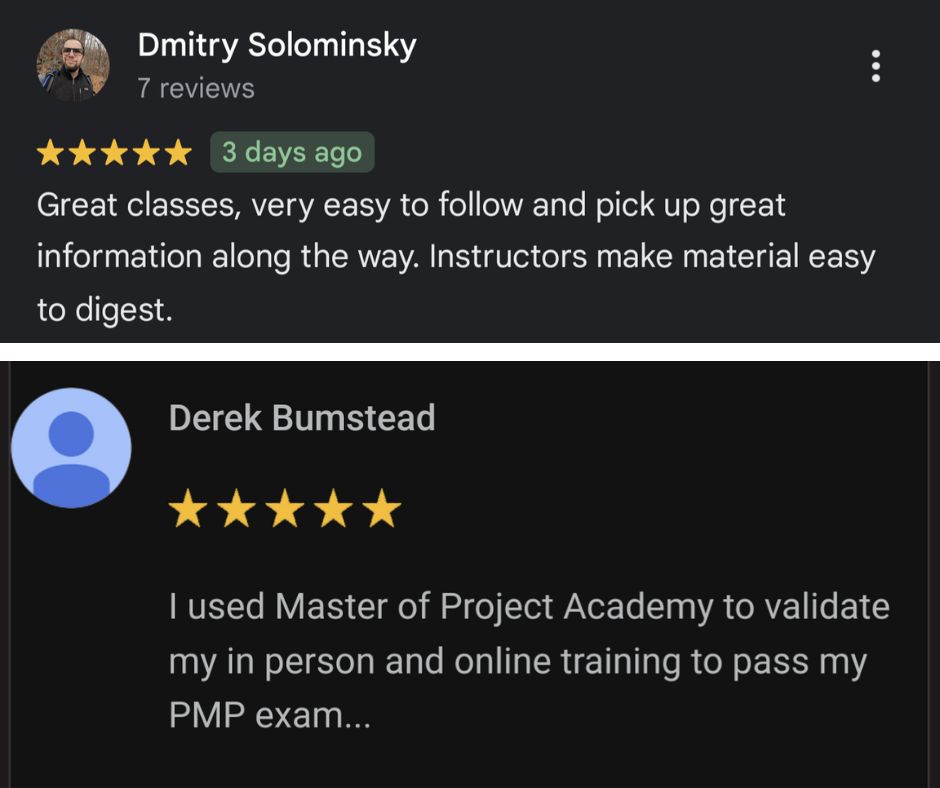
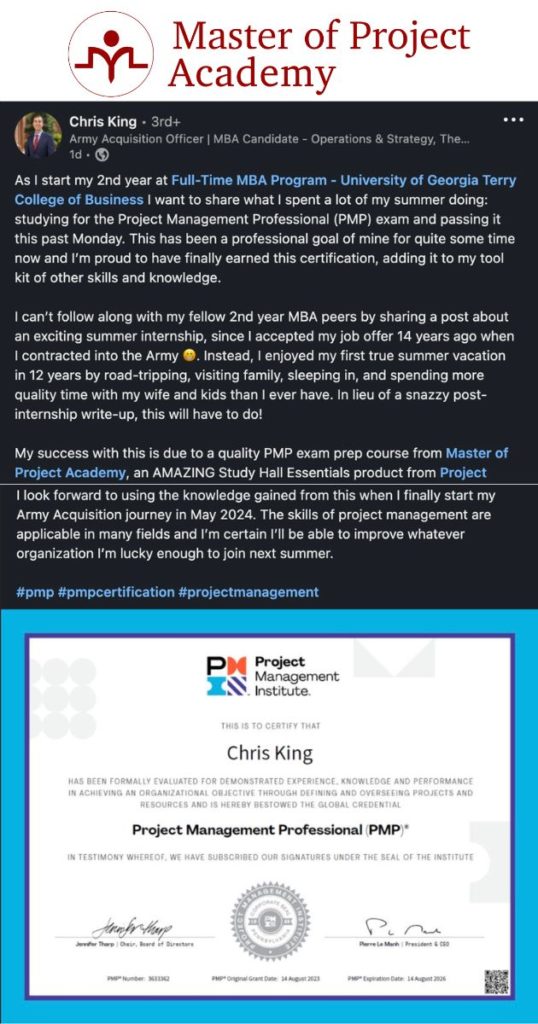
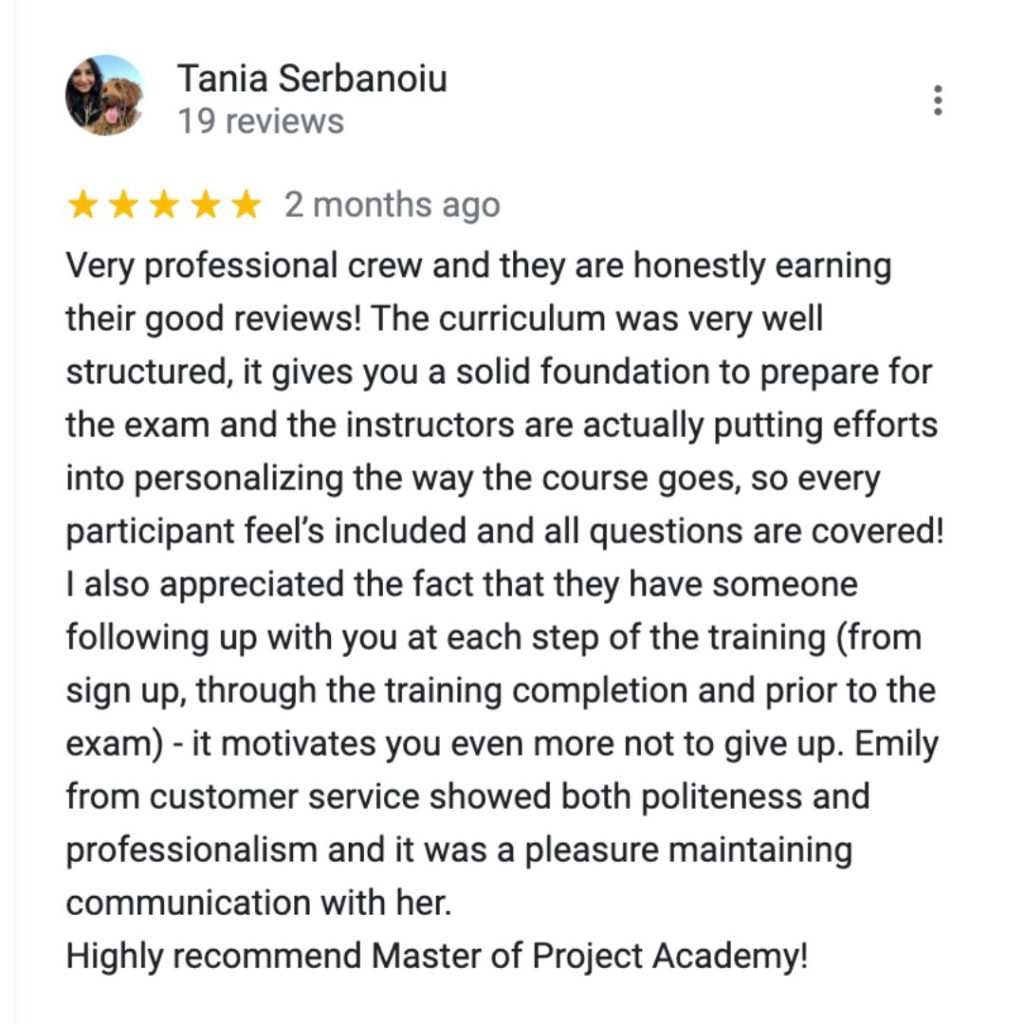
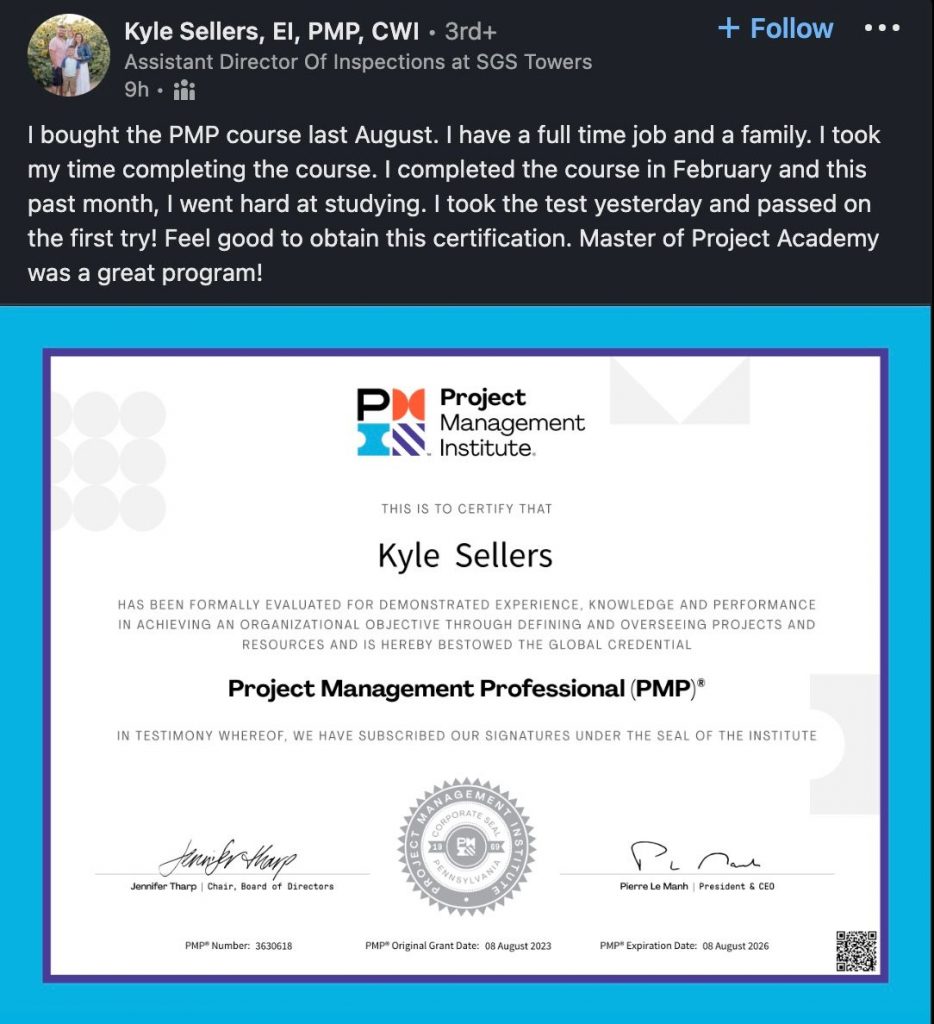
Every PMP preparation platform features testimonials. Smiling faces. Five-star ratings. Enthusiastic proclamations of “Passed on first try!”
These testimonials blend together into an indistinguishable chorus of success—until you look closer. What separates genuine first-time pass experiences from carefully curated marketing? More importantly, what do these stories reveal about what actually creates first-time success?
Master of Project Academy students share a common refrain: “I passed on my first attempt.” But the stories behind that statement reveal nuanced journeys, specific breakthrough moments, and transferable insights that matter far more than the binary outcome.
Beyond the Headline: What First-Time Success Actually Entails
“Passed on first try” sounds simple. The reality is more complex.
Thomas Nguyen’s testimonial reads: “Master of Project Academy helped me pass the PMP on my first attempt after just eight weeks of preparation. Highly recommended!”
The fuller story reveals what that success required:
Thomas works as an IT project manager at a healthcare technology company, managing electronic health record implementations. He has seven years of project management experience but had never used PMI’s formal methodology.
His preparation journey began with a diagnostic assessment that humbled him. “I scored 62%,” Thomas recalls. “I thought I knew project management, but the assessment revealed huge gaps in my understanding of PMI’s framework. That wake-up call was crucial.”
Thomas committed to ten hours of weekly study, blocking his calendar religiously. He worked through the curriculum systematically, taking detailed notes and creating mind maps to connect concepts.
“The real learning happened during scenario practice,” Thomas shares. “I’d encounter a question, select what seemed like an obvious answer, and discover I was wrong. The detailed explanations showed me how PMI wanted me to think about the situation differently.”
His breakthrough came during week five. “I was working through a change management scenario. My instinct said escalate to the sponsor immediately. But the PMI approach emphasized trying to resolve at the team level first, using the servant leadership mindset. Once I understood that pattern—collaborative before authoritative—everything started clicking.”
Thomas took three full-length practice exams under timed conditions, scoring 78%, 82%, and 85%. “That final 85% gave me confidence. I knew I was ready.”
On exam day, Thomas arrived early, reviewed his mental frameworks one final time, and approached the exam methodically. “I finished with forty minutes remaining and felt cautiously optimistic,” he remembers. “When the screen displayed ‘Congratulations,’ I actually shouted ‘Yes!’ in the testing center. Probably embarrassed myself, but I didn’t care.”
This is what “passed on first try” actually means: diagnostic humility, systematic preparation, pattern recognition development, consistent practice, and exam-day execution. The testimonial headline captures the outcome; the story reveals the process.
The Anatomy of Authentic Testimonials
Genuine first-time pass testimonials share common elements:
Specific Struggle Points
Authentic testimonials acknowledge difficulties. “The course was perfect, everything was easy” lacks credibility because PMP preparation is inherently challenging.
Listen to Linda Martinez: “I struggled terribly with earned value management calculations. No matter how many times I reviewed the formulas, I’d confuse CPI and SPI. Finally, an instructor walked me through creating visual mnemonics. That personalized intervention made the difference.”
This specificity—the particular struggle, the precise solution—signals genuine experience rather than manufactured marketing.
Breakthrough Moments
Real testimonials identify turning points when understanding crystallized.
David Okonkwo describes his moment: “I’d been treating every exam question as unique. Then an instructor explained that scenarios follow patterns—stakeholder conflict, scope creep, resource constraints. Once I learned to recognize the pattern, I could apply the appropriate framework. That shifted me from 70% practice scores to 85%+.”
These insights provide value to prospective students by identifying how understanding develops, not just that it develops.
The First-Time Pass Phenomenon: What 99.6% Really Means for Your PMP Journey
Preparation Methodology
Authentic testimonials detail study approaches, providing actionable guidance for others.
Priya Patel shares: “I created a study schedule balancing video content, reading, and practice questions. Each week followed the same pattern: Monday-Wednesday for new content, Thursday for review, Friday-Sunday for practice scenarios. This rhythm built both knowledge and confidence systematically.”
This level of detail—the actual study structure—helps prospective students understand what effective preparation entails.
Honest Timeline
Credible testimonials acknowledge realistic preparation timeframes.
Marcus Johnson’s testimonial notes: “I spent eleven weeks preparing, studying 12-15 hours weekly. Some people might do it faster, but I needed that time to truly internalize the concepts. Rushing would have risked failure.”
This honesty—that thorough preparation takes time—sets realistic expectations rather than promising implausible shortcuts.
Instructor Impact
Genuine testimonials identify specific ways expert guidance contributed to success.
Sarah Chen explains: “When I posted a question about how to approach situational questions where multiple answers seemed correct, an instructor responded within three hours with a decision framework. That framework became my go-to tool during the exam.”
This specificity—the exact problem and precise solution—demonstrates real instructor interaction rather than vague platitudes about “great support.”
What Testimonials Reveal About Methodology
Analyzing testimonials collectively reveals patterns about effective preparation:
Scenario-Based Learning Dominance
Nearly every first-time pass testimonial mentions scenario practice as the critical preparation element.
“I watched all the videos and read all the content, but I didn’t really learn until I started working through scenarios,” reports Kevin Zhang. “Scenarios forced me to apply knowledge rather than just recognize it.”
This consistent pattern validates scenario-based methodology as central to first-time success—not supplemental, but foundational.
Community Learning Impact
Many testimonials highlight peer interaction as unexpectedly valuable.
Jennifer Wu shares: “I joined a study group with three other MoPA students. We’d discuss confusing scenarios, share mental models, and quiz each other. That collaborative learning accelerated my understanding beyond what solo study could achieve.”
The recurrence of community themes suggests that isolation limits learning while collaboration enhances it—a insight with practical implications for how students should approach preparation.
Adaptive Learning Value
Testimonials frequently reference how the curriculum addressed their specific gaps.
“The diagnostic assessment identified that I was strong on technical PM content but weak on leadership and strategic alignment,” explains Robert Taylor. “The platform directed me to exactly what I needed rather than making me review everything equally. That efficiency was crucial given my limited study time.”
This adaptive element appears in testimonials across different student profiles, suggesting its broad applicability.
Beyond Certification: How Specialist Training Develops Career-Long PM Competency
Expert Guidance at Critical Moments
While self-paced learning provides foundation, testimonials reveal that expert intervention at specific confusion points often creates breakthroughs.
“I’d been stuck on a particular stakeholder management concept for three days,” Alicia Morales recalls. “I posted a question, and an instructor responded with an analogy that made everything click instantly. That five-minute intervention saved me days of confusion.”
The pattern suggests that expertise isn’t about comprehensive instruction but strategic intervention at critical learning moments.
Reading Between the Lines: What Testimonials Don’t Say
Testimonials also reveal insights through what they don’t emphasize:
Minimal Content Volume Focus
Testimonials rarely mention the quantity of course content. Students don’t praise “500 hours of video” or “1,000 practice questions.”
Instead, they highlight quality and relevance: “The scenarios felt remarkably similar to actual exam questions” or “The explanations addressed exactly my confusion points.”
This absence suggests that content volume matters less than content precision—a critical distinction often missed by platforms emphasizing comprehensiveness over relevance.
Why Project Management Specialists Beat General Learning Platforms Every Time
Limited Gamification Mention
Despite many platforms incorporating gamification elements, testimonials rarely credit badges, points, or leaderboards with contributing to success.
Students focus instead on substantive elements: effective explanations, realistic practice, expert guidance. The silence on gamification suggests it may enhance engagement but doesn’t directly drive learning outcomes.
The Science of Learning: How Gamification Transforms PMP Exam Preparation
Sparse Price Discussion
Testimonials seldom mention course cost, despite price being a major decision factor for prospective students.
When cost appears, it’s framed as value rather than affordability: “Worth every penny” or “The investment paid for itself when I passed on the first try and received my salary increase.”
This pattern suggests that students evaluating their preparation retrospectively focus on outcome value rather than input cost—a perspective shift that occurs after experiencing first-time success.
The Economics of First-Time Success: What a 99.6% Pass Rate Really Saves You
The Testimonials Master of Project Academy Students Don’t Write
Understanding what makes testimonials credible also means recognizing testimonial patterns that signal problems:
Red Flag 1: Vague, Generic Praise
“Great course! Highly recommended! Passed easily!” provides no substantive information about methodology, struggle points, or specific value.
Authentic testimonials include details that demonstrate real experience: specific concepts that challenged them, particular features that helped, precise study strategies that worked.
Red Flag 2: Unrealistic Timelines
“I passed after just two weeks with zero preparation!” strains credibility. While some experienced PMs prepare efficiently, testimonials promising effortless success in unrealistic timeframes often signal marketing rather than authentic experience.
Credible testimonials acknowledge that quality preparation requires time investment, even when efficient.
Red Flag 3: Perfect Experience Claims
“Everything was perfect, no challenges at all!” contradicts the reality of preparing for a rigorous professional exam.
Authentic testimonials acknowledge that learning involves struggle, confusion, and breakthrough moments—the messy reality of mastery rather than a sanitized marketing narrative.
Red Flag 4: Excessive Platform Comparison
“I tried five other platforms before finding this one, which was infinitely better in every way!” feels scripted rather than organic.
Genuine testimonials might reference previous failed attempts or mention trying another resource, but they focus primarily on their current positive experience rather than extensively denigrating alternatives.
Your Complete Roadmap: Combining Burn Rates with PMP Certification for Career Acceleration
Testimonial Transparency: The Master of Project Academy Approach
Master of Project Academy’s testimonials reflect diverse experiences:
Some students pass after eight weeks; others need twelve. Some find scenarios immediately intuitive; others struggle initially before experiencing breakthroughs. Some study independently; others rely heavily on community interaction.
This diversity matters because it signals authenticity. Real students have varied experiences based on their backgrounds, learning styles, preparation time, and individual challenges.
The consistent element across testimonials isn’t identical experiences—it’s successful outcomes achieved through methodology that adapts to individual needs.
Using Testimonials as Guidance
Prospective students should read testimonials strategically:
Look for Your Profile
Find testimonials from students with backgrounds similar to yours. If you’re a career changer with limited PM experience, testimonials from similarly positioned students provide more relevant insights than those from 15-year PM veterans.
Identify Success Patterns
Notice what successful students emphasize: scenario practice, diagnostic assessments, instructor interaction, community engagement. These recurring themes suggest essential preparation elements.
Extract Methodology
Pay attention to study strategies students describe. How did they structure their preparation? What resources did they prioritize? When did they feel ready?
These practical insights provide a roadmap for your own preparation.
Calibrate Expectations
Notice the realistic timeframes and effort levels testimonials describe. This helps set appropriate expectations for your own journey rather than assuming success will come easily or quickly.
6 Reasons 99.1% of Our Students Pass the PMP Exam on the First Attempt (and How You Can Too)
Your Testimonial Awaits
Every “Passed on first try” testimonial represents a journey from candidate to certified professional—a journey involving struggle, growth, breakthrough moments, and ultimately, success.
The question isn’t whether you’re capable of that journey. The question is whether you’re willing to prepare using methodology that consistently produces first-time success.
Ready to write your first-time pass testimonial? Explore Master of Project Academy’s PMP Certification Training and join thousands whose success stories begin with choosing specialized preparation designed for first-time results. Your testimonial journey starts with the right preparation partner.
Frequently Asked Questions
Q: How can I tell if testimonials are genuine or fabricated?
A: Genuine testimonials include specific details about challenges faced, breakthrough moments, study strategies, and particular features that helped. They acknowledge struggle and realistic timeframes. Vague, exclusively positive testimonials lacking detail often signal marketing rather than authentic experience. Look for testimonials that sound like real people describing real experiences.
Q: Should I expect my preparation experience to match what testimonials describe?
A: Use testimonials as guidance, not blueprints. Everyone’s learning journey differs based on background, learning style, available study time, and individual strengths/weaknesses. The consistent element should be the methodology (scenario-based learning, expert guidance, adaptive assessment), while specifics of your experience will vary.
Q: What if I’m not passing practice exams at the rates testimonials describe?
A: Learning curves vary. Some students immediately score 75%+ on practice exams; others need multiple attempts and focused review to reach that level. What matters is upward trajectory and willingness to identify and address weak areas. If practice scores aren’t improving despite sustained effort, seek instructor guidance to diagnose learning obstacles.
Q: Do I need the same preparation timeline testimonials mention?
A: Preparation timeframes depend on prior knowledge, available study time, and learning pace. Some students prepare in 6-8 weeks with intensive daily study; others need 12-14 weeks with more limited weekly hours. Focus on mastering the content rather than matching specific timelines. Passing prepared is better than failing rushed.
Q: How important is it to engage with the community if I prefer independent study?
A: Learning styles vary. Some students benefit enormously from community interaction; others learn effectively independently. Testimonials highlighting community value signal it’s a beneficial option, not a requirement. However, remaining open to community resources—even if not your primary approach—provides a valuable backup when you encounter confusion or need alternative perspectives.