
The PMP exam application fee is $405 for PMI members ($555 for non-members). Failed attempts cost an additional $275 each. Most professionals calculate PMP preparation costs by adding course fees to exam fees—and stop there.
This calculation misses the larger economic picture. The true cost of PMP exam failure extends far beyond retake fees, encompassing lost salary increases, delayed career advancement, extended preparation time, and opportunity costs that compound with each failed attempt.
Master of Project Academy’s 99.6% first-time pass rate isn’t just an achievement metric—it’s an economic advantage that saves students thousands of dollars and months of career progression. Understanding this economic reality transforms how you evaluate PMP preparation investments.
The Direct Costs of Exam Failure
Start with the obvious expenses. According to PMI’s data, approximately 40% of first-time test-takers fail the PMP exam. Industry surveys suggest the average candidate requires 1.7 attempts to pass.
Scenario 1: The One-Retake Candidate
- Initial exam fee: $405 (member) or $555 (non-member)
- First retake fee: $275
- Additional study materials: $150-300 (many candidates purchase new resources after failing)
- Extended preparation time: 6-8 additional weeks
- Total direct cost: $830-1,130 (compared to $405-555 for first-time success)
Scenario 2: The Multiple-Attempt Candidate
Industry data shows that candidates who fail twice have a 65% chance of requiring a third attempt. Let’s examine the economics:
- Initial exam fee: $405
- First retake: $275
- Second retake: $275
- Supplemental study resources: $400-600 (often including coaching or alternative platforms)
- Extended preparation time: 12-16 additional weeks
- Total direct cost: $1,355-1,555 (nearly triple the single-attempt cost)
These direct costs, while significant, pale in comparison to the indirect economic impact.
The First-Time Pass Phenomenon: What 99.6% Really Means for Your PMP Journey
The Hidden Costs: Opportunity and Career Impact
Carlos Rodriguez initially chose a $200 PMP preparation course to save money. After failing twice and spending six months in extended preparation, he calculated his actual cost:
“I focused on the $200 course fee and thought I was being smart financially,” Carlos reflects. “But I didn’t consider what those six extra months cost me.”
Why Project Management Specialists Beat General Learning Platforms Every Time
Carlos had been promised a project manager promotion upon PMP certification, with a $15,000 salary increase. Six months of delayed certification meant $7,500 in lost immediate earnings.
Additionally, his company’s next promotion cycle occurred during his extended preparation period. Without the PMP credential, he wasn’t considered for a senior PM role that went to a less-experienced colleague who’d already certified. That position offered a $28,000 salary increase over his current role.
“My $200 ‘savings’ cost me at least $35,000 in first-year lost earnings alone,” Carlos calculated. “Not to mention the compounding effect over my career—every future raise and promotion builds on your current salary base.”
This opportunity cost pattern repeats across thousands of professionals annually. The economic impact includes:
Delayed Salary Increases
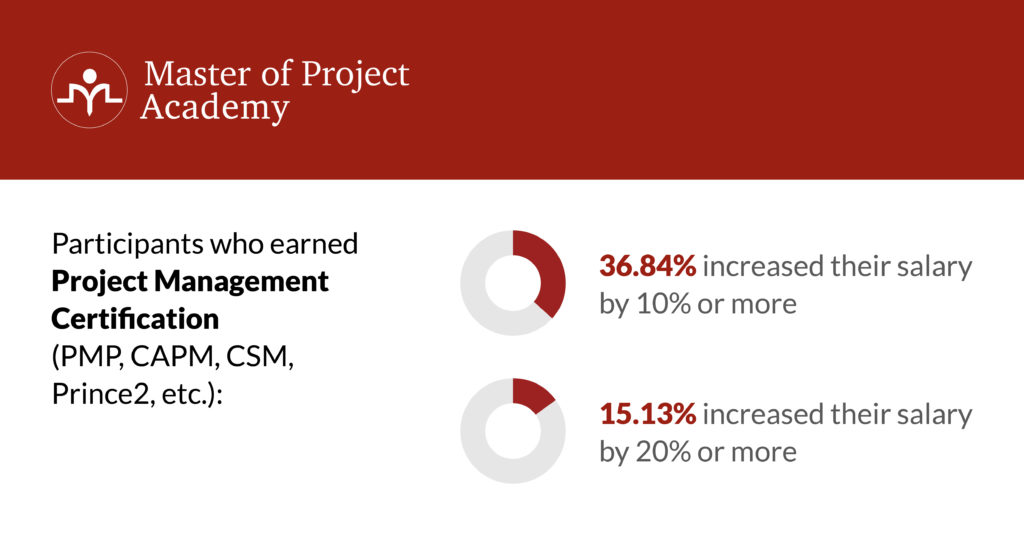
PMI’s Earning Power Salary Survey consistently shows PMP-certified project managers earn 16-32% more than non-certified peers, depending on geography and industry.
For a project manager earning $85,000 annually, a conservative 20% PMP premium equals $17,000 per year. Each month of delayed certification costs approximately $1,417 in lost earnings.
Six-month delay: $8,500 in lost immediate earnings
Twelve-month delay: $17,000 in lost immediate earnings
These figures don’t account for compounding effects. That initial earnings gap affects every subsequent raise, bonus, and promotion calculation throughout your career.
How to Negotiate a 10% Salary Raise Once You Have Passed the PMP Exam?
Postponed Career Advancement
Many organizations require PMP certification for advancement to senior PM roles, program management, or PMO leadership. Delayed certification means delayed eligibility for these opportunities.
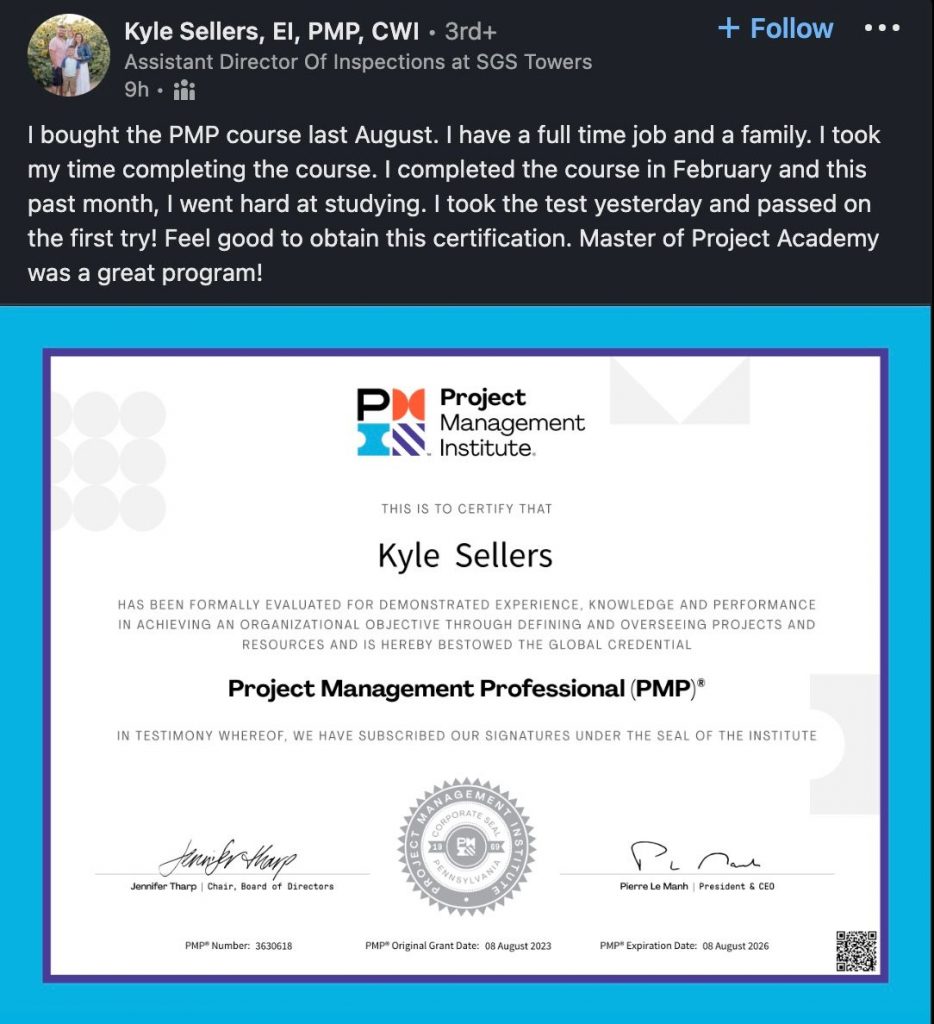
Rebecca Thompson experienced this directly. “I failed my first PMP attempt in March,” she shares. “My company posted a program manager opening in May requiring PMP certification. By the time I passed in July, they’d filled the position. I waited another eighteen months for a similar opportunity.”
That eighteen-month delay cost Rebecca:
- Lost salary differential between PM and program manager roles: $36,000
- Delayed access to executive visibility and strategic project assignments
- Postponed progression toward director-level roles
“When I calculated the real cost of failing that first attempt, I was stunned,” Rebecca admits. “The $275 retake fee was nothing compared to what the delay cost my career trajectory.”
Extended Preparation Time Value
Time spent preparing for PMP retakes carries opportunity cost beyond lost salary increases. Consider what professionals sacrifice during extended preparation:
Professional development alternatives. The 150+ hours many candidates spend on second and third preparation attempts could instead develop complementary skills: data analytics, agile coaching certifications, leadership training, or domain-specific technical knowledge.
Personal time. Samantha Williams spent eight months preparing for the PMP across three attempts. “I missed my daughter’s soccer season, skipped family vacations, and constantly felt guilty about the time I wasn’t spending with my family,” she recalls. “When I finally passed, my first thought was relief that I could reclaim my evenings and weekends.”
While difficult to quantify financially, these personal costs represent real sacrifices with long-term implications for work-life balance and personal well-being.
Stress and mental burden. The psychological toll of repeated failure creates stress that affects both professional performance and personal relationships. Several students report that exam anxiety from previous failures impaired their focus during subsequent attempts, creating a negative cycle.
From Theory to Practice: Mastering Earned Value Management Through Simulation
The Compounding Career Impact
The most significant economic consideration extends beyond immediate salary effects to career trajectory implications.
Consider two project managers who start at identical $90,000 salaries:
Manager A passes the PMP on first attempt:
- Immediate 20% salary increase to $108,000
- Year 2: 4% merit increase = $112,320
- Year 3: Promotion to senior PM = $135,000
- Year 4: 4% merit increase = $140,400
- Year 5: Promotion to program manager = $165,000
- Five-year total earnings: $660,720
Manager B fails twice, passes on third attempt after eight-month delay:
- Year 1: Remains at $90,000 (no PMP)
- Year 2: Achieves PMP, 20% increase = $108,000
- Year 3: 4% merit increase = $112,320
- Year 4: 4% merit increase = $116,813
- Year 5: Promotion to senior PM = $140,000 (one level behind Manager A)
- Five-year total earnings: $567,133
Economic difference: $93,587 over five years—and Manager B remains one career level behind, affecting all future earnings.
This analysis assumes Manager B’s delayed certification only postpones advancement by one year. In reality, missed promotional windows often create longer delays, amplifying the economic impact.
The ROI of First-Time Success
Now consider the investment in preparation designed for first-time success.
Master of Project Academy’s comprehensive PMP preparation typically costs $300-500, depending on promotional timing and package selection. This investment includes:
- Specialized, scenario-based curriculum
- Expert instructor access
- Adaptive practice exams
- Community support
- Current, exam-aligned content
Compare this to the economic cost of exam failure:
Direct costs of two failed attempts: $830-1,130
Opportunity cost (six-month delay at $85K salary): ~$8,500
MoPA investment: $300-500
Net economic advantage of first-time success: $8,030-9,330
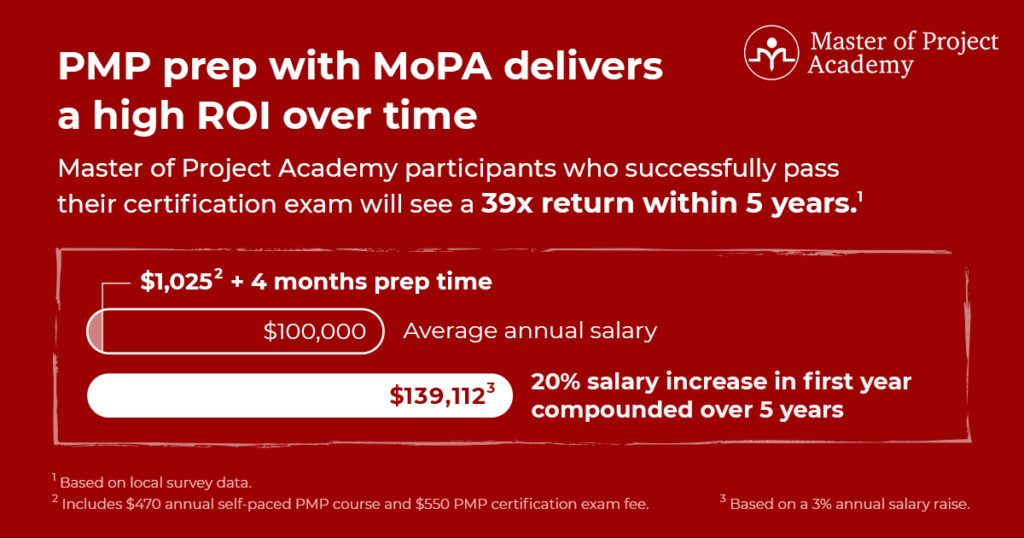
Even using conservative assumptions, first-time success delivers immediate ROI of 1600-3100% on the preparation investment—and this calculation ignores the compounding career impact discussed earlier.
Real Student Economics
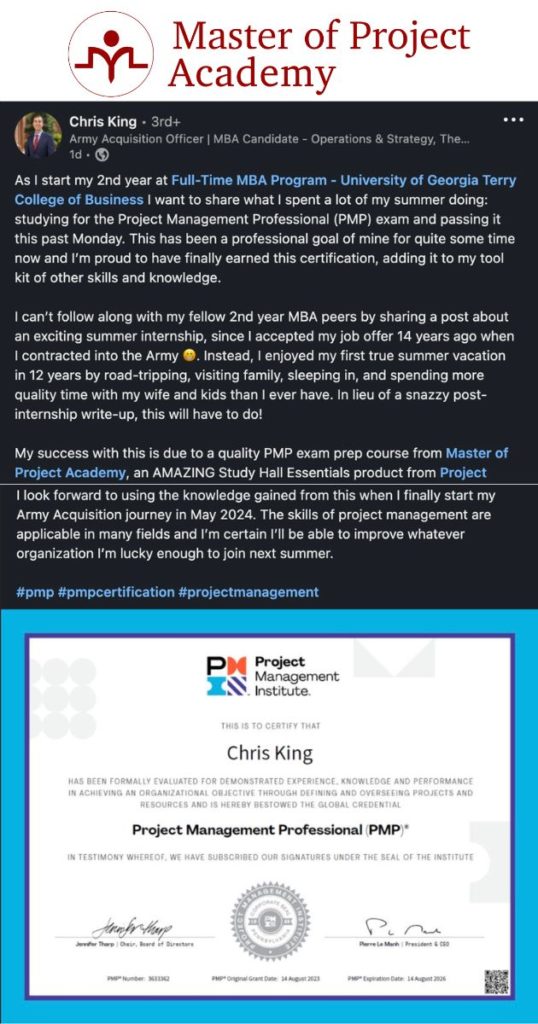
Michael Foster calculated his precise ROI: “I invested $449 in Master of Project Academy’s PMP program. I passed on my first attempt after ten weeks of preparation. My employer increased my salary from $92,000 to $112,000 upon certification—a $20,000 annual increase.”
“If I’d failed and spent another three months preparing for a retake, I would have lost $5,000 in immediate earnings plus the $275 retake fee. But more importantly, my company does salary reviews in October. If I’d missed that cycle, I’d have waited another full year for the increase, losing the entire $20,000.”
“So my $449 investment returned $20,000 in year one alone, plus positioned me for a program manager role that opened six months later. That’s a 4,400% first-year ROI, not counting the compounding effect over my career.”
From Zero to PMP: Five Professionals Who Passed on Their First Attempt
The False Economy of Cheap Preparation
Many professionals gravitate toward low-cost or free PMP preparation resources, viewing expensive courses as unnecessary. This logic fails to account for the economic value of first-time success.
A $150 course with a 60% first-time pass rate costs more in total economic terms than a $500 course with a 99.6% first-time pass rate when you factor in retake fees, delayed certification, and lost career opportunities.
Low-Cost Option Economics:
- Course cost: $150
- Expected retakes (40% fail rate): $110 (0.4 × $275)
- Expected delay cost (40% fail, 2-month average delay): $2,833
- Expected total cost: $3,093
High-Quality Option Economics:
- Course cost: $500
- Expected retakes (0.4% fail rate): $1.10 (0.004 × $275)
- Expected delay cost: $28 (0.004 × 2 months)
- Expected total cost: $529
The “expensive” option costs $5.84 for every dollar spent on the “cheap” option—a savings of 83% in total economic terms.
6 Reasons 99.1% of Our Students Pass the PMP Exam on the First Attempt (and How You Can Too)
Beyond Economics: The Confidence Factor
While harder to quantify, the psychological and professional confidence that comes from first-time success carries significant value.
“Passing on my first attempt validated that I belonged in project management,” shares Jennifer Zhao. “When I interview for new positions or lead complex initiatives, I have the quiet confidence of someone who succeeded under pressure. That self-assurance affects how I negotiate salary, how I approach challenging projects, and how I’m perceived by executives.”
This confidence compounds throughout careers, influencing decisions to pursue leadership roles, negotiate compensation, and take on high-visibility projects—all of which carry economic implications beyond direct salary effects.
Making the Investment Decision
The question isn’t whether you can afford high-quality PMP preparation. The question is whether you can afford the economic consequences of inadequate preparation.
Consider your personal economics:
- Current salary and expected PMP premium (typically 20-25%)
- Time until next promotion or salary review cycle
- Career opportunities requiring PMP certification
- Value of time spent on extended preparation
For most professionals, these calculations reveal that premium preparation isn’t an expense—it’s an investment with measurable, significant ROI.
The Science of Learning: How Gamification Transforms PMP Exam Preparation
Your Economic Decision
Master of Project Academy’s 99.6% first-time pass rate represents more than pedagogical effectiveness. It’s an economic advantage that saves students thousands of dollars and accelerates career progression by months or years.
The choice isn’t between expensive and affordable preparation. It’s between preparation designed for first-time success and preparation that accepts failure as likely.
When you account for retake fees, delayed salary increases, postponed promotions, extended preparation time, and compounding career effects, the economics overwhelmingly favor specialized, high-quality preparation.
Calculate your personal ROI. Explore Master of Project Academy’s PMP Certification Training and discover why thousands of professionals view premium preparation not as a cost but as one of the highest-return investments in their careers. Your first-time success—and the economic benefits it delivers—starts with choosing preparation designed for that outcome.
Frequently Asked Questions
Q: How do I calculate my personal ROI for PMP certification and preparation investment?
A: Start with your current salary and research PMP salary premiums in your industry/geography (typically 16-32%). Multiply your salary by the conservative premium (e.g., $80,000 × 0.20 = $16,000 annual increase). Subtract preparation costs and exam fees. Most professionals achieve ROI in 2-4 weeks of post-certification employment, with compounding benefits thereafter.
Q: What if my employer doesn’t offer an immediate raise for PMP certification?
A: Even without immediate raises, PMP certification affects next performance review outcomes, eligibility for promotions, and external job market value. Additionally, PMP certification often becomes a requirement for advancement even if not immediately rewarded, making delayed certification a career bottleneck.
From Contributor to Change Leader: A Self‑Assessment Framework for Project Manager Maturity
Q: Is expensive preparation worth it if I’m confident in my project management knowledge?
A: Experienced PMs often struggle most with the PMP exam because it tests PMI’s methodology, not real-world practices. The exam failure rate is similar across experience levels. Investment in specialized preparation protects against the false confidence that leads to failed attempts and their associated costs.
How Burn Rates Changes Everything About Learning Project Management?
Q: How do I justify preparation costs to my employer?
A: Present the business case: PMP certification increases project success rates, improves organizational project management maturity, and provides credential verification of competency. Many employers offer professional development budgets or will reimburse preparation costs upon certification. Frame it as an investment in both your capabilities and organizational project management effectiveness.
Q: What’s the long-term career value of PMP certification beyond salary increases?
A: PMP opens doors to senior PM, program manager, PMO, and executive roles often inaccessible without certification. It signals commitment to professional excellence, creates networking opportunities through PMI membership, and provides a foundation for advanced certifications. The career trajectory impact extends far beyond immediate salary effects.