The online learning marketplace offers thousands of PMP preparation courses. A search on Udemy returns over 10,000 results. Coursera, LinkedIn Learning, Pluralsight, and dozens of other platforms host project management content. Many courses cost less than $50 during promotional periods.
With such abundant, affordable options, why would anyone invest in specialized project management training?
The answer reveals a fundamental truth about professional certification preparation: depth of expertise matters exponentially more than breadth of course offerings.
Generic learning platforms excel at providing surface-level knowledge across thousands of topics. They struggle to deliver the specialized, scenario-based mastery required for rigorous professional certifications like the PMP. Understanding this distinction transforms how you approach certification preparation—and ultimately determines whether you pass on your first attempt or join the 40% who fail.
6 Reasons 99.1% of Our Students Pass the PMP Exam on the First Attempt (and How You Can Too)
The Generalist Platform Business Model
To understand why generalist platforms fall short for PMP preparation, examine their business model:
Volume Over Specialization
Platforms like Udemy generate revenue through course volume. They host content on everything from yoga instruction to quantum physics, wedding photography to cybersecurity. This breadth is their value proposition: “Learn anything, anywhere.”
This model creates inherent tensions with certification preparation:
Instructor Variability: Udemy allows anyone to create courses. Some PMP instructors are experienced professionals with deep expertise. Others created a course because they recently passed the exam themselves or see PMP training as a revenue opportunity. The platform provides no quality floor—only market ratings that lag actual student outcomes.
No Outcome Accountability: Generalist platforms earn revenue when students purchase courses, not when students pass exams. There’s no structural incentive to ensure preparation quality or track pass rates. A course with 4.5 stars and enthusiastic reviews might have a 50% pass rate, but the platform doesn’t measure or report this.
Content Update Challenges: The PMP exam changes regularly, most significantly in 2021 when PMI introduced the new exam format emphasizing agile, hybrid methodologies, and people skills. Updating course content requires instructor time and effort without additional revenue. Many generalist platform courses remain outdated years after major exam changes.
The Clock is Ticking: Why You Must Earn Your PMP Before the Major 2026 Exam Update
Contrast this with specialized platforms:
Singular Focus: Master of Project Academy exists exclusively for project management professional development. Every resource, every instructor, every curriculum decision focuses on one outcome: developing competent project managers who pass certification exams and excel in their roles.
Outcome-Driven Model: Success metrics center on student pass rates and career outcomes, not just course enrollments. The 99.6% pass rate isn’t marketing—it’s the core performance indicator that drives all curriculum and instruction decisions.
Continuous Content Refinement: When PMI updates exam content, specialized platforms update immediately. There’s no lag because outdated content directly impacts the core business metric: student success.
The Depth vs. Breadth Distinction
Sarah Mitchell’s experience illustrates this difference perfectly.
Sarah purchased a $29.99 Udemy PMP course during a promotional period. The course promised “40 hours of comprehensive content covering all PMBOK areas.”
She diligently worked through the material over eight weeks. The instructor explained each knowledge area thoroughly. The practice questions tested her recall of concepts. She felt prepared.
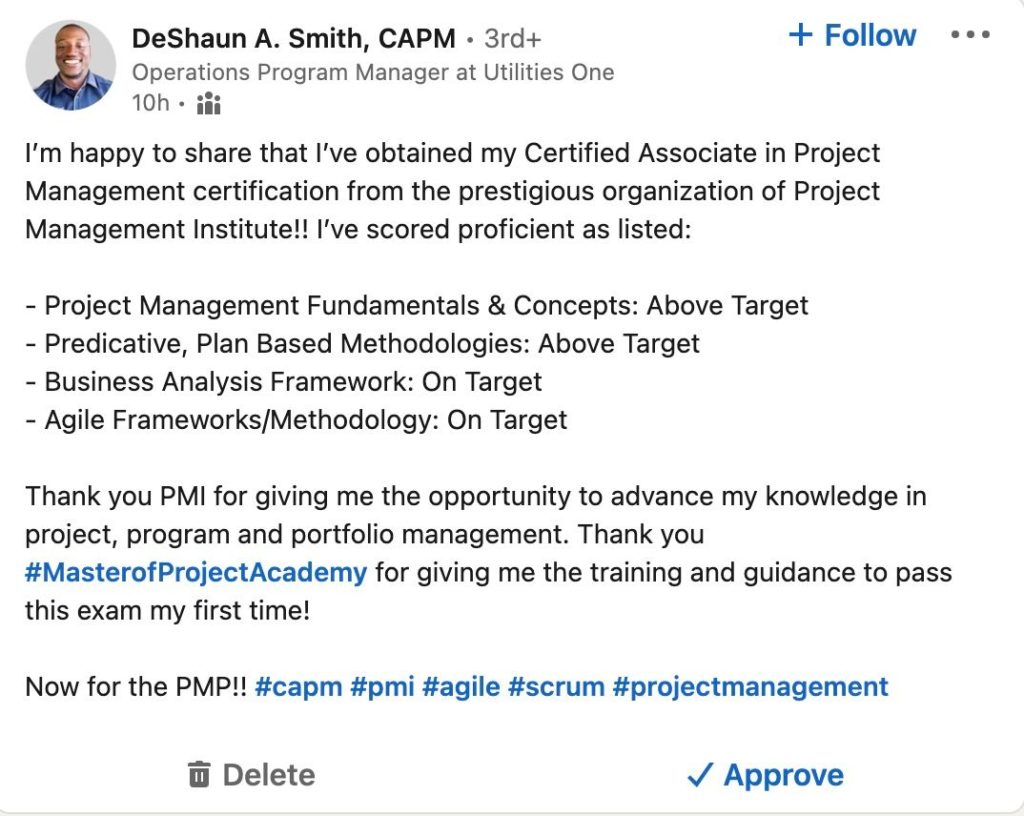
Sarah failed her first PMP attempt, scoring Below Target in two domains.
“The Udemy course taught me what the PMBOK Guide says,” Sarah reflects. “But the actual exam tested whether I could apply PMI’s framework to complex scenarios I’d never encountered. Those are completely different skills.”
Frustrated but determined, Sarah invested in Master of Project Academy’s program. Within six weeks, she understood the gap:
Generalist Platform Approach:
- Comprehensive coverage of all content areas
- Lecture-based instruction explaining concepts
- Practice questions testing recall and recognition
- Generic scenarios without industry context
- Minimal instructor interaction beyond pre-recorded content
Specialist Platform Approach:
- Targeted coverage of exam-relevant content with depth over breadth
- Scenario-based instruction developing application skills
- Practice questions testing judgment and decision-making
- Contextualized scenarios reflecting real project situations
- Expert instructors available for personalized guidance
“The specialist platform didn’t just teach me project management,” Sarah explains. “It taught me how to think like PMI expects—how to analyze scenarios, identify patterns, and select responses aligned with the methodology. That’s the skill the exam actually tests.”
Sarah passed her second attempt with Above Target in all domains. The difference wasn’t more study time or greater effort—it was preparation methodology aligned with exam requirements.
The Scenario Mastery Gap
The 2021 PMP exam revision fundamentally changed what the exam tests. Rather than asking “What does the PMBOK Guide say about risk management?” it presents complex scenarios:
“You’re leading a software development project using a hybrid approach. During sprint planning, a key stakeholder requests adding a major feature that wasn’t in the original scope. The team is concerned this will impact the current sprint goals, but the stakeholder emphasizes the feature is critical for a competitor response. What should you do first?”
This question type—and the exam contains 180 of them—requires:
- Situation Analysis: Understanding the scenario’s context, constraints, and stakeholder dynamics
- Pattern Recognition: Identifying this as a scope change scenario with competing priorities
- Framework Application: Knowing PMI’s prescribed approach to scope changes in hybrid environments
- Option Evaluation: Analyzing multiple plausible responses to identify the best initial action
- Judgment Under Uncertainty: Making decisions with incomplete information
Generic courses can teach you what scope change control means. They struggle to develop the judgment required to navigate this scenario under timed exam conditions.
Why Generalist Platforms Struggle with Scenario Mastery:
Insufficient Scenario Volume: Creating realistic, exam-aligned scenarios requires deep PMI framework expertise and understanding of actual exam question patterns. Generic courses typically include 200-500 practice questions. Specialized platforms provide 2,000+ scenarios covering diverse situations.
Shallow Explanations: Generic course answers often provide one-sentence explanations: “B is correct because it follows the change control process.” Specialized platforms provide comprehensive analysis: why each option aligns or conflicts with PMI methodology, what patterns the scenario represents, and how to recognize similar situations.
Static Content: Generic courses present the same scenarios to all students regardless of performance. Specialized platforms adapt, providing targeted scenarios that address your specific knowledge gaps.
Limited Context: Generic scenarios occur in abstraction. Specialized platforms contextualize scenarios across industries, team structures, and project types, building pattern recognition that transfers to any exam scenario.
Navigating the Fastest Growing Industries in the U.S.: A Project Manager’s Guide
The Instructor Expertise Difference
Michael Chen encountered this difference dramatically.
His Udemy course instructor was enthusiastic and clearly knowledgeable about project management. The lectures were well-organized and professionally produced. But when Michael posted a question about earned value management in the course forum, he waited four days for a response—and the answer provided, while technically accurate, didn’t address his specific confusion.
With Master of Project Academy, Michael posted a similar question and received a detailed response within three hours from a PMP-certified instructor with 15+ years of project management experience.
“The difference wasn’t just response time,” Michael explains. “The MoPA instructor understood exactly what I was confused about and provided an explanation that addressed my specific mental model gap. The Udemy response felt like someone copy-pasted from a textbook.”
Generalist Platform Instructor Challenges:
Variable Expertise: Platforms allow anyone to create courses. Some instructors are highly qualified; others have minimal practical experience beyond passing the exam themselves.
Limited Availability: Instructors on generalist platforms typically teach dozens of courses across multiple platforms. Student support is secondary to content creation.
No Quality Standards: Platforms don’t require instructors to maintain certifications, demonstrate teaching capability, or achieve student outcome thresholds.
Scalability Over Personalization: With thousands of students per course, personalized guidance becomes impossible. Forum responses come from other students or generic instructor replies.
Specialized Platform Instructor Advantages:
Verified Expertise: All instructors hold active PMP certification and demonstrated teaching effectiveness. Many have 10+ years of project management experience across diverse industries.
Dedicated Availability: Instructors focus exclusively on student success, not creating courses across multiple platforms. They’re available for real-time guidance during student preparation.
Outcome Accountability: Instructor performance is measured by student pass rates and satisfaction, creating direct incentive alignment.
Personalized Interaction: Smaller student-to-instructor ratios enable meaningful personalization—instructors learn individual student challenges and provide targeted guidance.
The Hidden Curriculum: What Generic Courses Miss
Beyond explicit content differences, specialized platforms provide implicit learning that generic courses cannot:
The PMI Mindset
PMI’s methodology reflects specific values: servant leadership over command-and-control, collaboration over authority, proactive stakeholder engagement over reactive management. These values shape how PMI expects you to approach scenarios.
Generic courses teach the methodology’s mechanics. Specialized platforms develop the mindset that informs correct answers even in ambiguous situations.
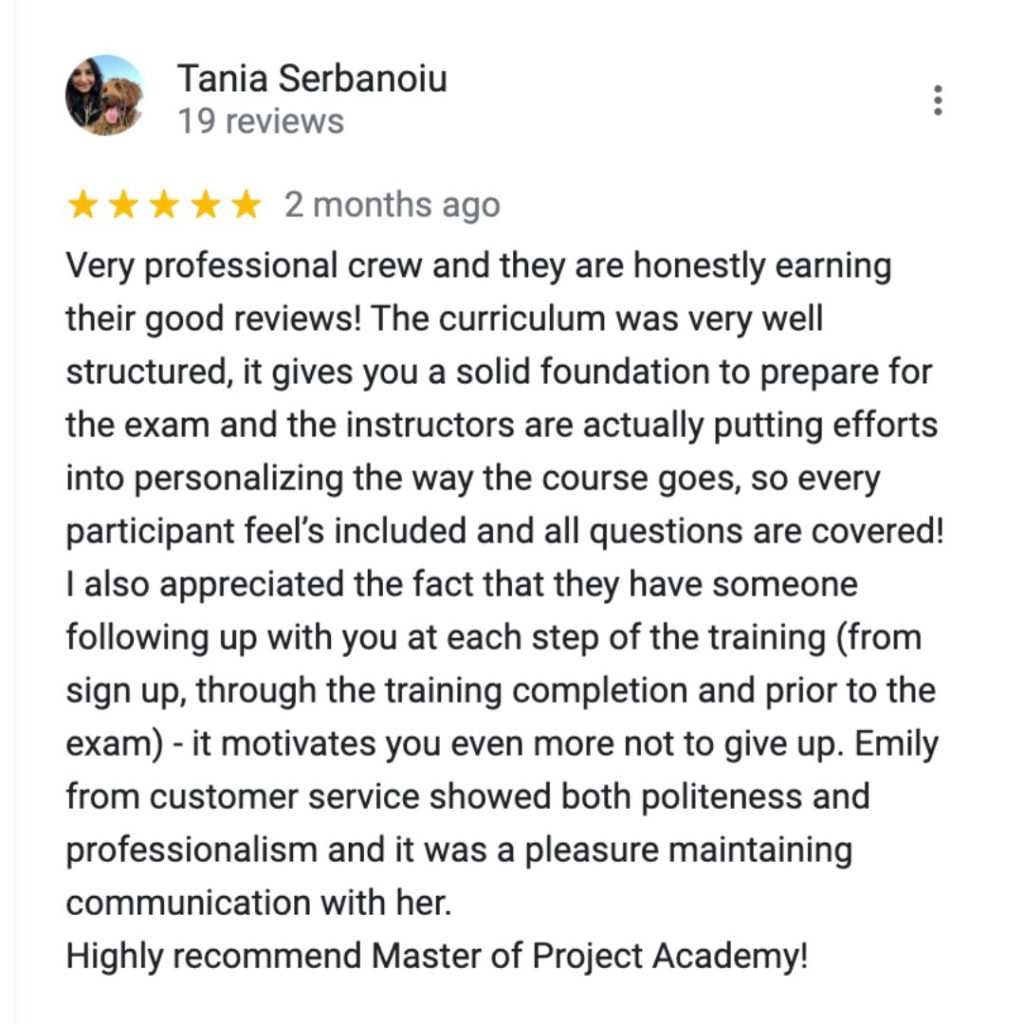
Jennifer Wu describes her realization: “I understood stakeholder management techniques from my Coursera course. But I was still thinking like a traditional manager: ‘What should I tell stakeholders to do?’ MoPA taught me to think like PMI expects: ‘How do I engage stakeholders to collaboratively solve this challenge?’ That shift in mindset changed how I approached every exam question.”
Exam Strategy and Psychology
The PMP exam isn’t just a knowledge test—it’s a psychological endurance challenge. Four hours of concentration. 180 complex scenarios requiring judgment calls. Mental fatigue that accumulates as the exam progresses.
Generic courses provide practice questions. Specialized platforms teach exam-taking strategy:
- Pacing techniques to maintain consistent speed without rushing
- Mental fatigue management to preserve decision-making quality late in the exam
- Scenario analysis frameworks to efficiently evaluate complex questions
- Confidence calibration to know when to trust your answer versus flagging for review
- Stress management to maintain performance under pressure
These meta-skills often determine success as much as content knowledge.
Pattern Recognition Development
The PMP exam draws from a finite set of scenario patterns: scope changes, stakeholder conflicts, resource constraints, risk events, quality issues, team performance challenges. Each appears in different contexts, but the underlying structure repeats.
Specialized platforms explicitly teach pattern recognition. Students learn to identify scenario types instantly and apply the appropriate framework, dramatically reducing time-per-question and cognitive load.
Generic courses present scenarios as unique situations requiring individual analysis. This approach works for practice but fails under exam time pressure when you need instant pattern recognition.
How Regenerative Agriculture Principles Can Help You Pass the PMP Exam?
The Community and Network Effect
Learning happens in context, accelerated by community interaction.
Generic platforms provide forums where students can post questions. Response time varies from hours to never. Quality varies from expert insights to misleading information from other confused students.
Specialized platforms cultivate learning communities:
Curated Study Groups: Students connect with others at similar preparation stages, sharing insights and supporting each other through challenging concepts.
Expert Moderation: Community discussions are monitored by instructors who correct misconceptions, provide authoritative answers, and guide productive conversation.
Peer Learning Networks: Students learn from each other’s diverse backgrounds—an IT PM’s perspective on agile implementation, a construction PM’s insights on resource leveling, a healthcare PM’s experience with stakeholder management.
Post-Certification Community: Relationships continue beyond exam success, creating professional networks that support career development.
This community aspect particularly benefits students who are the only PM at their organizations or lack mentorship access—specialized platforms provide the professional community that generalist courses cannot.
Strategic Networking: The Project Manager’s Roadmap to Career Lift-Off
The Adaptation and Personalization Advantage
Marcus Johnson scored 68% on his first diagnostic assessment with Master of Project Academy—failing range. The adaptive system immediately identified his weak areas: earned value management, agile principles, and leadership concepts.
His personalized learning path concentrated on these gaps while lightly reviewing his strong areas (risk management, procurement, stakeholder engagement). This targeted approach maximized learning efficiency.
“If I’d followed a generic course’s linear curriculum, I’d have spent equal time on everything,” Marcus notes. “That would have wasted dozens of hours reviewing what I already knew while giving inadequate attention to my actual gaps.”
Generic platforms present identical content sequences to all students. Whether you’re strong in agile and weak in quantitative methods or vice versa, you watch the same videos in the same order.
Specialized platforms assess individual knowledge, identify specific gaps, and adapt content delivery accordingly. This personalization can reduce preparation time by 30-40% while improving outcomes.
The Future Belongs to Those Who Master Both Domain Knowledge and Project Management
The Accountability and Support System
When you struggle with generic course content, you’re on your own. The platform has already captured your payment. Whether you pass or fail doesn’t affect their business.
When you struggle with specialized platform content, you have a support system invested in your success:
Personal Check-ins: Instructors monitor student progress, reaching out when engagement drops or practice scores plateau.
Intervention Strategies: If a student repeatedly struggles with specific concepts, instructors provide alternative explanations, additional practice, or one-on-one clarification.
Accountability Mechanisms: Regular assessments, progress tracking, and milestone goals keep students on track toward exam readiness.
Success Partnership: Your success is the platform’s success—literal, measured success in pass rate statistics that determine the platform’s reputation.
This accountability transforms preparation from a solitary endeavor into a supported journey.
Unlock Your PMP® Potential: Discover the Strategies That Turn Ambition into Achievement
The Total Cost of Ownership
Generic courses appear cheaper—$29.99 versus $499. But total cost of ownership tells a different story:
Generic Platform Total Cost:
- Course: $29.99
- Average retakes (industry 40% fail rate): 0.4 × $275 = $110
- Supplemental materials after failing: $150
- Extended preparation time opportunity cost: $3,000+
- Expected total cost: $3,290+
Specialized Platform Total Cost:
- Course: $499
- Average retakes (0.4% fail rate): 0.004 × $275 = $1.10
- Supplemental materials: $0 (comprehensive platform)
- Opportunity cost: Minimal (first-time success)
- Expected total cost: $500
The “expensive” specialized training costs 85% less in total ownership terms while delivering superior outcomes.
The Ultimate Guide to PMP Exam Cost: Everything You Need to Know
When Generalist Platforms Work
Generalist platforms serve valuable purposes:
Exploratory Learning: If you’re exploring whether project management interests you, a $29 introductory course provides low-risk exposure.
Supplemental Knowledge: For specific topics outside certification preparation—advanced Excel, particular software tools, soft skills development—generalist platforms offer affordable options.
Continuing Education: After PMP certification, various specialized courses on agile coaching, portfolio management, or industry-specific PM challenges can complement your development.
What generalist platforms cannot effectively provide is the deep, scenario-based, expertly supported preparation required for rigorous professional certification success.
Making the Platform Decision
The choice between generalist and specialist platforms for PMP preparation isn’t about budget—it’s about goals.
Choose a generalist platform if:
- You’re exploring project management casually
- You don’t have specific timeline constraints
- You’re comfortable with multiple exam attempts
- Cost minimization is your primary objective
Choose a specialist platform if:
- You’re committed to first-time exam success
- You value time and want efficient preparation
- You need expert guidance and support
- You understand total cost of ownership versus sticker price
- You want preparation that develops actual PM competency, not just exam passage
For serious professionals pursuing career-defining certification, the choice is clear.
Your Specialist Advantage Awaits
The PMP certification represents significant career investment. The exam is rigorous, the stakes are high, and the difference between first-time success and repeated failure extends far beyond exam fees.
This isn’t the time for generic, one-size-fits-all preparation. It’s the time for specialized, expert-guided, outcome-focused training designed specifically for the challenges you face.
Ready to experience the specialist advantage? Explore Master of Project Academy’s PMP Certification Training and discover why focused expertise delivers results that generalist platforms simply cannot match. Your first-time success deserves preparation built specifically for that outcome.
Frequently Asked Questions
Q: Can’t I just use free YouTube videos and PMBOK Guide study instead of paying for any course?
A: While free resources can supplement preparation, they lack structured curriculum, scenario-based practice aligned with current exam format, expert guidance for confusion points, and adaptive assessment identifying knowledge gaps. The PMP exam’s scenario complexity requires systematic preparation—piecemeal free resources rarely provide this. Many students who fail using free resources subsequently invest in structured courses.
Q: How do I evaluate the quality of a PMP course before purchasing?
A: Key indicators include: verified pass rate data (not just testimonials), instructor credentials and availability, scenario practice volume and quality, content update frequency aligned with exam changes, adaptive assessment capabilities, and student support responsiveness. Request trial access or sample content to evaluate teaching quality and curriculum relevance.
Q: What if I’ve already purchased a generalist platform course—should I switch?
A: Assess your progress honestly. If practice exam scores consistently exceed 75% and you feel confident with scenario analysis, complete your current preparation. If you’re struggling with scenarios, not seeing score improvement, or lack confidence in exam readiness, investing in specialized preparation may prevent failed attempts and their associated costs.
Q: Do specialized platforms offer any content generic platforms don’t?
A: The content overlap is significant—both cover PMI methodology. The difference is depth, application focus, scenario volume and quality, adaptive learning, expert accessibility, and outcome accountability. Specialized platforms don’t teach different content; they teach the same content with methodology proven to develop exam-passing competency.
Q: How important is instructor interaction versus self-paced learning?
A: Learning styles vary, but for rigorous professional certifications, instructor access provides significant value. The ability to get expert clarification on confusion points, receive personalized feedback on practice performance, and understand nuanced scenario analysis often determines first-time success versus requiring retakes. Even primarily self-directed learners benefit from strategic instructor interaction.
Don’t risk your PMP success! Enroll in our live virtual PMP course and let our experienced Professors guide you, answer your questions, and provide real-world insights. We’re not just about passing the exam, we’re about building your confidence as a project manager.