Every project manager preparing for the PMP exam faces the same decision: invest in premium specialized training or choose affordable generalist platforms like Udemy.
The price difference is substantial. Udemy PMP courses range from $11.99 to $99.99 during frequent sales. Master of Project Academy’s comprehensive PMP program costs $499.
For budget-conscious professionals, Udemy seems obvious. Why pay 5-40× more for content that appears identical? Both promise comprehensive coverage. Both offer practice exams. Both include instructor access.
Yet when you examine actual student outcomes, curriculum depth, support quality, and total cost including retake fees and opportunity costs, the comparison reveals why thousands choose specialized training despite higher upfront costs.
This isn’t about disparaging Udemy—it’s a valuable platform with appropriate use cases. But PMP certification preparation reveals the limits of the generalist marketplace model and the advantages of specialized, outcome-focused training.
Why Project Management Specialists Beat General Learning Platforms Every Time?
Comparing Apples to Orchards: Understanding What You’re Actually Buying
Udemy’s Value Proposition:
- Access to a single course created by one instructor
- Fixed content library consumed at your pace
- Community forum for student questions
- Lifetime access to course materials
- 30-day money-back guarantee
Master of Project Academy’s Value Proposition:
- Comprehensive curriculum designed by PM certification experts
- Adaptive learning system that personalizes to your knowledge gaps
- Live expert instructor support with rapid response times
- Continuously updated content aligned with current exam
- Community of active students and certified professionals
- Success accountability measured by 99.6% pass rate
The fundamental difference: Udemy sells course access; Master of Project Academy sells certification success.
This distinction shapes everything—curriculum design, instructor incentives, content quality, student support, and ultimately, outcomes.
Curriculum Depth: Coverage vs. Mastery
Udemy PMP Course Typical Structure:
- 35-45 hours of video lectures covering PMBOK knowledge areas
- 500-1,000 practice questions
- Downloadable templates and reference materials
- Linear progression through content modules
Udemy’s top-rated PMP course by instructor Andrew Ramdayal has 40 hours of video and 500 practice questions. Students praise his clear explanations and engaging delivery.
Yet even the best Udemy PMP courses share structural limitations:
Static, One-Size-Fits-All Curriculum: Every student watches identical content in the same sequence. Whether you’re strong in agile and weak in earned value management or vice versa, you receive identical instruction.
Limited Scenario Depth: Practice questions test recognition and recall more than application. Explanations typically span 1-2 sentences rather than comprehensive analysis.
Outdated Content Risk: Course updates depend on individual instructor initiative. Some courses remain months or years out of alignment with current exam format after PMI changes.
No Diagnostic Assessment: Students begin without understanding their baseline knowledge or specific gaps, leading to inefficient preparation.
6 Reasons 99.1% of Our Students Pass the PMP Exam on the First Attempt (and How You Can Too)
Master of Project Academy Curriculum Approach:
Diagnostic-Driven Personalization: Begin with comprehensive assessment identifying specific strengths and weaknesses. The platform adapts content emphasis accordingly.
Scenario-Based Mastery: 2,000+ realistic scenarios across diverse contexts—IT, construction, healthcare, financial services, etc. Each includes detailed explanations analyzing why each option aligns or conflicts with PMI methodology.
Continuous Updates: Content updates occur within weeks of PMI exam changes. The platform continuously refines scenarios based on student feedback and exam pattern analysis.
Multi-Modal Learning: Video, text, interactive scenarios, spaced repetition flashcards, mind maps, and reference materials accommodate different learning styles.
Progressive Complexity: Start with foundational concepts, progress through application scenarios, culminate in full exam simulations mirroring actual difficulty.
PMP in 2026: The Smartest Certification Move You Can Make Before the Exam Changes
Instructor Access and Support Quality
Udemy Instructor Model:
Instructors on Udemy typically teach 10-50+ courses across the platform. PMP course instruction is one revenue stream among many. They’re incentivized to create new courses rather than provide intensive student support.
Student questions posted in course forums receive varying response quality:
- Some instructors respond within 24-48 hours with helpful answers
- Others take 3-7 days or never respond
- Many questions receive answers from other students, with accuracy ranging from excellent to misleading
The platform provides no instructor response time guarantees or quality standards. Your experience depends entirely on which course you purchased.
Master of Project Academy Instructor Model:
MoPA instructors exist solely to support student certification success. Their performance is measured by student outcomes—pass rates, satisfaction scores, and time-to-certification.
This creates fundamentally different support dynamics:
Rapid Response: Questions typically receive expert responses within 2-6 hours during business hours, often faster.
Comprehensive Answers: Responses address the specific confusion point, provide context, offer analogies or alternative explanations, and suggest related practice scenarios.
Proactive Intervention: Instructors monitor student progress, identifying struggling students and reaching out with support before they become discouraged.
Quality Standards: All instructors hold active PMP certification, demonstrate teaching effectiveness, and maintain student satisfaction thresholds.
Practice Quality: Questions vs. Scenarios
The PMP exam doesn’t test whether you memorized the PMBOK Guide. It tests whether you can apply PMI’s framework to realistic, complex scenarios with competing priorities and ambiguous situations.
Typical Udemy Practice Question:
“What document should the project manager consult to understand stakeholder communication requirements?”
A) Communications management plan
B) Stakeholder engagement plan
C) Project charter
D) Requirements documentation
Correct Answer: A
Explanation: “The communications management plan defines stakeholder communication requirements.”
This question tests recognition and recall. You either know the answer or you don’t. There’s limited analytical thinking required.
Master of Project Academy Practice Scenario:
“You’re managing a software development project using a hybrid approach. The product owner requests adding a significant new feature after you’ve completed sprint planning for the current iteration. Your team expresses concern that this addition will jeopardize their ability to deliver the sprint goal. The product owner emphasizes this feature is critical for responding to a competitor’s recent release. Your sponsor supports the product owner’s urgency but wants to minimize project risk. What is the BEST first action?”
A) Add the feature to the current sprint and work with the team to expedite delivery
B) Explain to the product owner that changes cannot be made after sprint planning is complete
C) Facilitate a discussion with the product owner and team to evaluate the feature’s urgency, impact, and alternatives
D) Escalate to the sponsor to make the final decision about whether to include the feature
Correct Answer: C
Detailed Explanation:
This scenario tests your understanding of servant leadership, collaborative problem-solving, agile principles, and scope change management in hybrid environments.
Why C is correct: PMI’s methodology emphasizes the project manager’s role as facilitator and servant leader. Before making decisions or escalating, you should facilitate collaborative discussion to understand the situation fully. This discussion would address:
- The feature’s true urgency and business value
- Impact on current sprint goals and team capacity
- Alternatives (adding to sprint backlog for next iteration, reducing scope elsewhere, extending timeline)
- Risk implications of different approaches
This collaborative approach honors both the product owner’s business concerns and the team’s delivery concerns while gathering information needed for sound decision-making.
Why A is incorrect: While seemingly responsive to business needs, immediately adding the feature without collaborative analysis disregards the team’s concerns and agile principles of sustainable pace and commitment-based planning. This command-and-control approach conflicts with servant leadership.
Why B is incorrect: While sprint plans should be protected from constant changes, rigid inflexibility ignores legitimate business dynamics. PMI’s framework values business value delivery and stakeholder satisfaction alongside process adherence. The key is collaborative evaluation, not automatic rejection.
Why D is incorrect: Escalation should not be your first action when you can facilitate resolution at the team level. Prematurely escalating suggests you’re avoiding your facilitation and problem-solving responsibilities. Escalation is appropriate after team-level resolution attempts have been exhausted.
Scenario Pattern: This represents a scope change request pattern with competing priorities (business urgency vs. delivery commitment). Recognize this pattern’s core tension: responsiveness to legitimate business needs versus maintaining planned commitments. PMI’s approach: collaborative problem-solving before decision-making or escalation.
Related Concepts: Servant leadership, collaborative decision-making, agile principle of responding to change, stakeholder management, scope change control in hybrid environments.
The difference in educational value is stark. The first question tests memorization. The second develops the analytical thinking and framework application required for exam success.
Content Currency and Update Frequency
PMI updated the PMP exam significantly in January 2021, shifting from predictive-focused content to include substantial agile, hybrid, and business environment focus. The exam’s domain structure changed from ten knowledge areas to three domains (People, Process, Business Environment).
Udemy Update Challenge:
Updating a Udemy course requires instructor initiative—re-recording videos, creating new practice questions, revising materials. Instructors receive no additional payment for updates; it’s pure cost.
Result: Many Udemy PMP courses lag months or years behind exam changes. Students discover this mismatch only after purchasing or, worse, after failing the exam.
Example: A popular Udemy course created in 2019 remains available with minimal updates. Reviews from 2024 note: “Content doesn’t match current exam format” and “Too focused on old methodology.”
While some Udemy instructors conscientiously maintain currency, students gamble when purchasing. There’s no platform guarantee of current content.
Master of Project Academy Update Process:
MoPA’s business model depends entirely on students passing the current exam. Outdated content directly threatens this.
Result: Updates occur within 2-4 weeks of PMI exam changes. The platform continuously monitors exam feedback, adjusts scenarios to match reported question patterns, and refines explanations based on student confusion points.
This isn’t occasional major revision—it’s continuous refinement ensuring every student prepares for the exact exam they’ll encounter.
🚀 The Clock is Ticking: Why You Must Earn Your PMP Before the Major 2026 Exam Update
Learning Adaptation and Personalization
Udemy Learning Path:
- Start at module 1
- Progress through modules sequentially
- Complete all content
- Take practice exams
- Review weak areas
Everyone follows this identical path regardless of prior knowledge, learning pace, or specific gaps.
Master of Project Academy Learning Path:
- Complete diagnostic assessment
- Receive personalized learning plan emphasizing your specific gaps
- Progress through adaptive curriculum that adjusts based on performance
- Take targeted practice scenarios addressing your weak areas
- Periodic reassessment identifies progress and remaining gaps
- Final preparation phase with full exam simulations
Two students with identical final scores might take completely different paths based on their unique knowledge profiles.
This adaptation can reduce preparation time by 30-40% while improving outcomes—you’re not wasting time reviewing what you already know or rushing past what you need to master.
Enroll in Master of Project Academy’s PMP courses to pass your PMP exam:
Community and Peer Learning
Udemy Community Experience:
Course forums where students post questions and occasionally receive instructor or peer responses. Interaction is asynchronous, sporadic, and varies dramatically by course.
Many students report feeling isolated, working through material alone without meaningful peer connection or collaborative learning.
Master of Project Academy Community Experience:
Active community of current students and recent passers:
- Moderated study groups organized by preparation timeline
- Live Q&A sessions with expert instructors
- Peer learning channels where students discuss scenarios and share insights
- Success story sharing that motivates and guides newer students
- Post-certification network for professional development
This community transforms solitary preparation into supported, collaborative learning.
Success Metrics and Outcome Transparency
Udemy Metrics:
- Course ratings (1-5 stars)
- Number of students enrolled
- Student testimonial text
What Udemy doesn’t report:
- Actual pass rates
- First-time pass rates
- Average time to certification
- Student performance improvements
You’re selecting based on course popularity and subjective reviews, not demonstrated outcomes.
Master of Project Academy Metrics:
- Verified 99.6% pass rate
- First-time pass emphasis in testimonials
- Average preparation time data
- Before/after diagnostic score improvements
These objective outcome measures provide evidence of preparation effectiveness beyond subjective satisfaction.
The Total Economic Comparison
Scenario: Experienced PM Preparing for PMP
Udemy Path (Actual Median Experience):
- Course cost: $29.99 (sale price)
- Exam attempt 1: $405 + $0 (fail)
- Supplemental materials: $150
- Exam attempt 2: $275 (pass)
- Total time: 16 weeks
- Total cost: $860.99 + opportunity cost of 12 extra weeks
Master of Project Academy Path (Actual Median Experience):
- Course cost: $499
- Exam attempt 1: $405 (pass)
- Supplemental materials: $0 (included)
- Total time: 10 weeks
- Total cost: $904
The costs appear similar, but the MoPA path delivers:
- First-time success (career advantage)
- 6 weeks earlier certification (faster salary increase access)
- Confidence from succeeding under pressure
- No failure experience affecting professional psychology
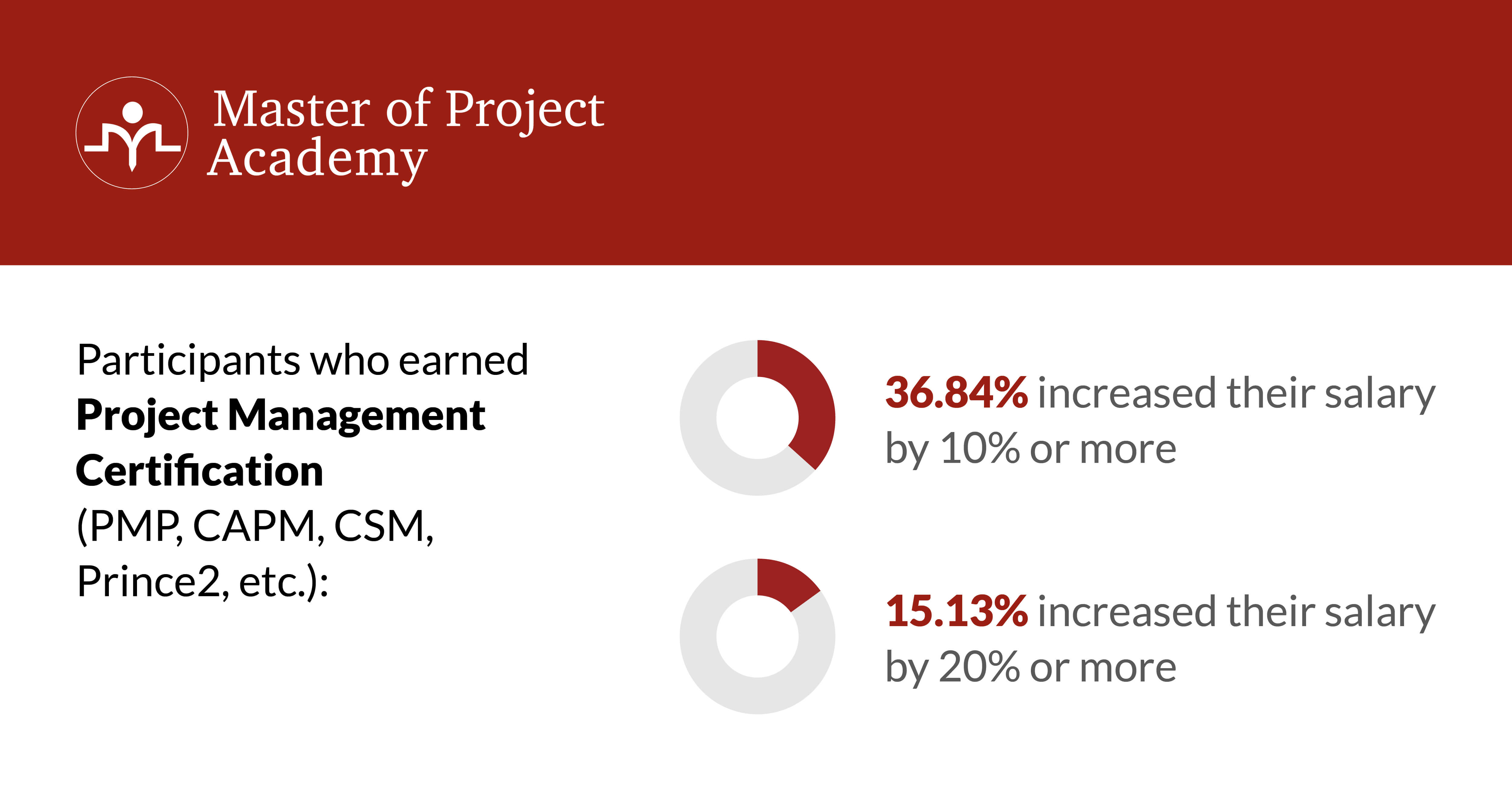
When you factor in the $8,000-15,000 annual salary increase most PMP holders receive, those six weeks of earlier certification represent $1,000-1,750 in additional earnings—making the specialized platform actually cheaper in total economic terms.
When Udemy Makes Sense for PM Learning
Udemy serves legitimate purposes for project managers:
Exploratory Learning: If you’re curious whether project management interests you, a $29 introductory course provides low-risk exposure.
Specific Skill Development: Post-certification courses on particular tools (MS Project, Jira, specific methodologies) offer affordable skill expansion.
Supplemental Knowledge: Soft skills, industry-specific PM approaches, or advanced topics can complement your core PM education.
Continuing Education: After PMP certification, various specialized courses support ongoing professional development.
What Udemy cannot effectively provide is the intensive, specialized, outcome-focused preparation required for first-time PMP success.
Making Your Platform Decision
The choice between Udemy and specialized platforms isn’t about which is “better” in abstract terms—it’s about which aligns with your goals and constraints.
Choose Udemy if:
- You’re exploring PM certification possibility without commitment
- You’re comfortable with multiple exam attempts if necessary
- Upfront cost minimization is your primary objective
- You’re highly self-directed and don’t need personalized guidance
- You have unlimited preparation time
Choose Master of Project Academy if:
- You’re committed to first-time certification success
- You value personalized learning adapted to your gaps
- You want expert support when confusion arises
- You understand total cost (including retakes and time) versus sticker price
- You prefer preparation designed specifically for the exam you’ll face
For serious professionals viewing PMP certification as a career investment, the specialized platform delivers measurably better outcomes despite higher upfront cost.
Your Preparation Success Starts Here
The PMP certification will likely be one of your most significant professional credentials. The exam is rigorous. The stakes—career advancement, salary increases, professional credibility—are substantial.
This isn’t the context for bargain-hunting or hoping adequate preparation comes from the cheapest option. It’s the context for investing in preparation specifically designed to deliver first-time success.
Ready to compare platforms based on outcomes, not just price? Explore Master of Project Academy’s PMP Certification Training and experience the difference between buying course access and investing in certification success. Your first-time pass deserves preparation built specifically for that outcome.
Frequently Asked Questions
Q: Can I use both Udemy and Master of Project Academy together?
A: While possible, this usually indicates uncertainty about your preparation approach. Most students find that committing fully to one comprehensive platform produces better results than fragmenting attention across multiple resources. If you’ve already purchased a Udemy course, complete an honest assessment: are your practice scores improving? Do you feel confident with scenario analysis? If yes, continue. If no, switching may prevent failed attempts.
Q: What if I can’t afford Master of Project Academy’s pricing?
A: Consider the total economics: retake fees ($275 each), delayed salary increases (potentially $1,000+ per month), and extended preparation time opportunity costs. Many students find that financing options or saving briefly for quality preparation costs less total than cheap preparation plus retakes. Additionally, some employers offer professional development budgets that can fund certification preparation.
Q: How do I know which Udemy PMP course is highest quality?
A: Look for courses by instructors who are active PMPs, have updated content within the past 6-12 months, provide detailed scenario explanations (not just answer keys), and show engagement in student questions. Check recent reviews specifically mentioning current exam alignment. Be skeptical of courses with many enrollments but few recent reviews—they may be outdated.
Q: Does Master of Project Academy offer a money-back guarantee like Udemy?
A: MoPA offers a satisfaction guarantee, though terms may vary by enrollment package. More importantly, the 99.6% pass rate suggests refund requests are rare—students succeed, making refunds unnecessary. Contact MoPA directly for current guarantee terms.
Q: What if I learn better from video lectures than interactive scenarios?
A: Learning style preferences matter, but research consistently shows that active learning (scenarios, application, problem-solving) produces better retention and skill transfer than passive learning (video watching, reading). Even if you prefer video initially, challenging yourself with scenario-based practice will better prepare you for the exam’s scenario-heavy format. Quality platforms include both video instruction and interactive practice.
Why 73% of Projects Fail: How Burn Rates Changes Everything About Learning Project Management