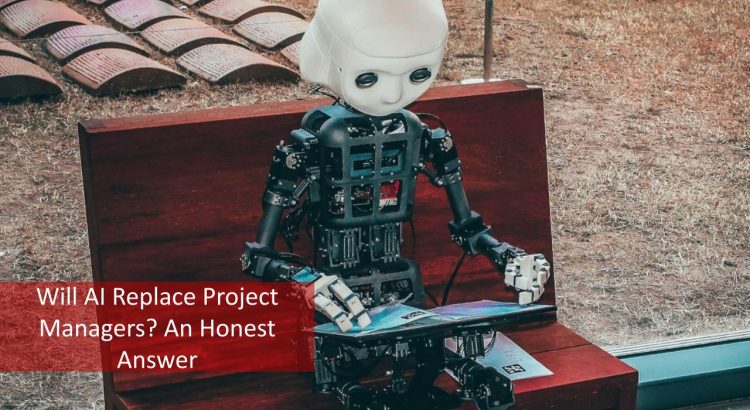
No — AI is not replacing the project manager role. It is absorbing the administrative layer of the job: status reports, schedule drafts, risk flagging, meeting notes. Accountability, judgment under ambiguity, stakeholder trust, and change leadership remain human work. The project managers at risk are not being replaced by AI — they are being replaced by project managers who use AI well.
That answer deserves evidence, not reassurance. So this guide walks through what AI can genuinely do in project management today, what it structurally cannot do, what the profession’s own institutions are signaling, and the specific moves that keep your career on the right side of the shift.
Is Project Management an AI-Proof Career Skill in 2026? (Yes — Here’s Why)
What can AI already do in project management?
A lot of the work you never loved. Today’s AI features draft schedules from briefs, summarize project status across tasks and threads, flag risks from patterns in project data, suggest resource allocations, and turn meetings into action items. The newest generation goes further — agent-style features that take multi-step actions inside your tools, not just answer questions.
AI Agents: The New Superheroes for Project Managers
Two things are true at once about these capabilities. They are genuinely good — the hours they return are real, and pretending otherwise is how PMs fall behind. And they are all, without exception, inputs: drafts to review, flags to investigate, suggestions to accept or overrule. Which leads directly to the second question.
What can’t AI do?
AI cannot own an outcome. When a project fails, no one schedules a retrospective with the scheduling algorithm — accountability lands on a person, and organizations know it. Beyond accountability, four capabilities stay stubbornly human: earning stakeholder trust and negotiating competing interests, exercising judgment when the situation is genuinely novel, leading people through change they did not choose, and governing AI itself — deciding when its outputs can be trusted and when they must be challenged.
That last one matters more each year. Every AI feature added to your toolchain creates new judgment work: is this risk flag signal or noise? Is this schedule compression based on data that matches our situation? Ironically, the spread of AI through project work increases demand for exactly the professional judgment AI lacks — someone has to be the adult in the room when the model is confidently wrong.
There is also a structural reason the role resists automation, one we have argued since the earliest version of this article: every project is, by definition, unique. AI systems excel where history repeats; projects exist precisely because something new is being attempted. The learning that transfers between projects is judgment, and judgment is the part that doesn’t automate.
Why L&D Leaders Must Rethink Project Management Training Before AI Widens the Skills Gap
What is the profession itself signaling?
Watch what the institutions do, not what the headlines say. In July 2026, PMI rebuilt the PMP® exam around a new content outline that explicitly tests AI — evaluating and applying AI tools for scheduling, risk analysis, and resource planning. Certifying bodies do not add competencies to credentials for roles they expect to disappear; they codify the skills the role now requires.
We covered every change in the new exam and exactly how it tests AI — and the short version is that PMI has institutionalized AI as a project management skill, not a project manager replacement. Meanwhile, PMI’s research on AI in project management indicates only about one in five project managers currently reports real AI proficiency — which means the adaptation gap is wide open, and it is an opportunity for the PMs who close it first. For the deeper argument on why disciplined delivery becomes more valuable as organizations struggle to scale AI pilots into outcomes, see our analysis of PMP value in an AI world.
How the role is changing (not disappearing)
The honest shift is from task coordination to outcome ownership. As AI compresses the administrative middle of the job, what remains — and what organizations increasingly hire for — is the top of the job: connecting projects to business value, governing risk (including AI risk), leading adoption, and making the calls the tools can’t. The lens we keep returning to has four words: value, data, governance, adoption. That is what the AI-enabled project manager actually does all day.
How do you future-proof your PM career?
- Get fluent with the tools. Hands-on beats theoretical — our guide to the best AI tools for project managers is the practical starting point.
- Certify the judgment layer. The PMP now formally tests AI-era judgment, which makes it the credential that documents exactly the skills automation can’t touch.
- Lead adoption and governance. Volunteering to run your team’s AI-tool evaluation or usage guidelines converts anxiety into visible leadership.
- Keep the human skills sharp. Negotiation, facilitation, difficult conversations — the parts of the role AI made more valuable by making everything else cheaper.
| The PMP® Certification Online Training Bundle is built for this exact moment: up-to-date lectures for the new exam that tests AI judgment, your 35 contact hours, 2,400+ practice questions, and included Analytics & AI and Power BI courses — so you certify the skills the AI era rewards. Our students hold a 99.6% first-attempt pass rate, audited through the Better Business Bureau®. |
Frequently asked questions
Will AI replace project managers?
No. AI is automating administrative project tasks — reporting, scheduling drafts, risk flagging — while accountability, stakeholder leadership, judgment, and change management remain human. The role is being reshaped toward outcome ownership, not eliminated.
The New Project Team: Humans and Bots (Autonomous AI Agents)
Which project management tasks will AI take over?
The repetitive, data-heavy layer: status summaries, schedule drafting, meeting notes, pattern-based risk flags, and resource suggestions. Each output still requires a human to validate and decide.
Is project management still a good career in 2026?
Yes — the role is evolving rather than shrinking. PMI added AI competencies to the PMP exam in 2026, a strong signal that the profession is institutionalizing AI as a skill within the role, and most project managers have not yet built AI proficiency, which favors those who do.
Why AI Can’t Replace Domain Mastery in Project Management
What skills make a project manager hard to replace?
Outcome accountability, stakeholder trust and negotiation, judgment in novel situations, change leadership, and the ability to govern AI outputs — knowing when to trust a tool and when to overrule it.
Is Creativity Still a Job-Proof Skill in 2026? (With AI Doing the First Draft)
Should project managers learn AI?
Yes, at the professional-judgment level: what the tools can do, where their data limits are, how to govern their risks, and how to lead teams through adopting them. You do not need to build models — you need to manage them.
P.S. — Already PMP-certified? Turn your renewal into an AI-era upgrade: the Data & BI Power 60 PDU Bundle earns the full 60 PDUs you need while building the dashboard, forecasting, and data-analysis skills that make AI-era project leaders credible.