
Every year, thousands of project management professionals sit for the PMP® or CAPM® certification exam believing they’ve prepared enough — only to discover that reading study guides and watching lectures wasn’t enough to replicate the pressure, pacing, and complexity of the real test.
The gap between studying and being exam-ready is where most candidates fail. And it’s not a knowledge gap. It’s a practice gap.
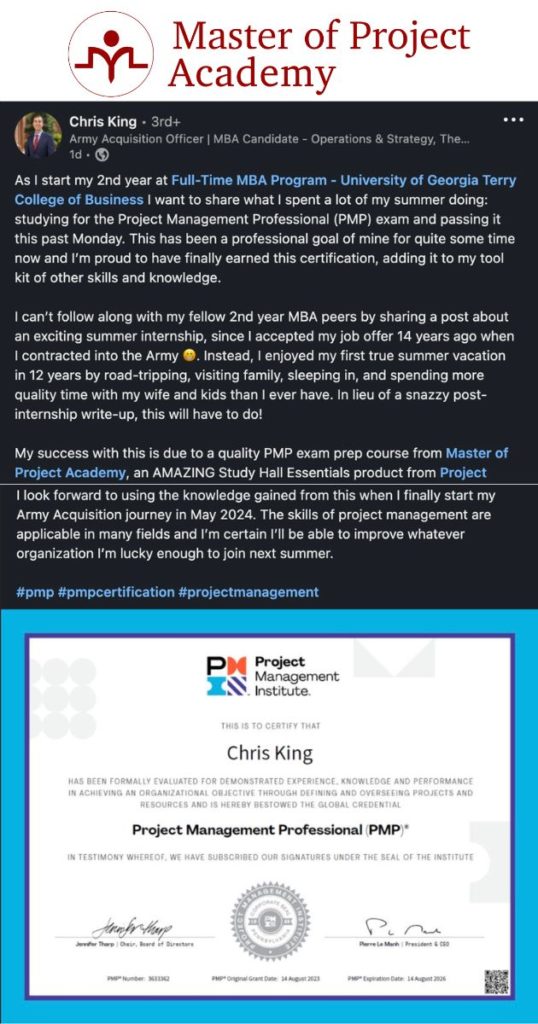
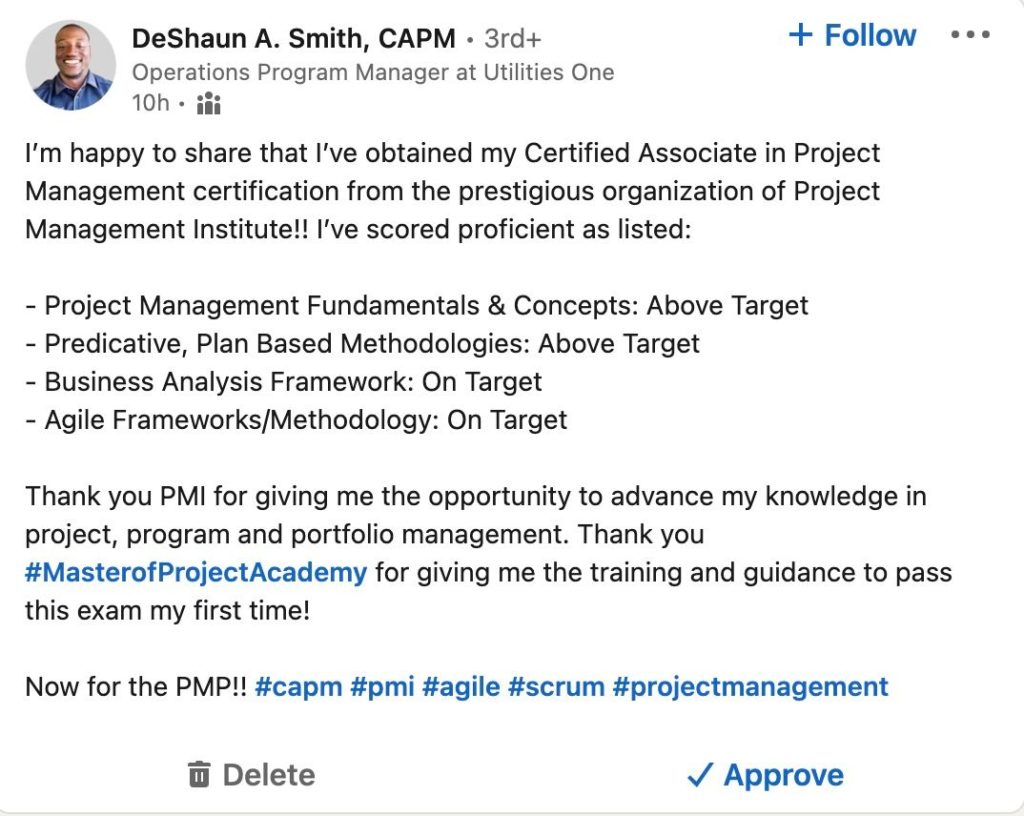
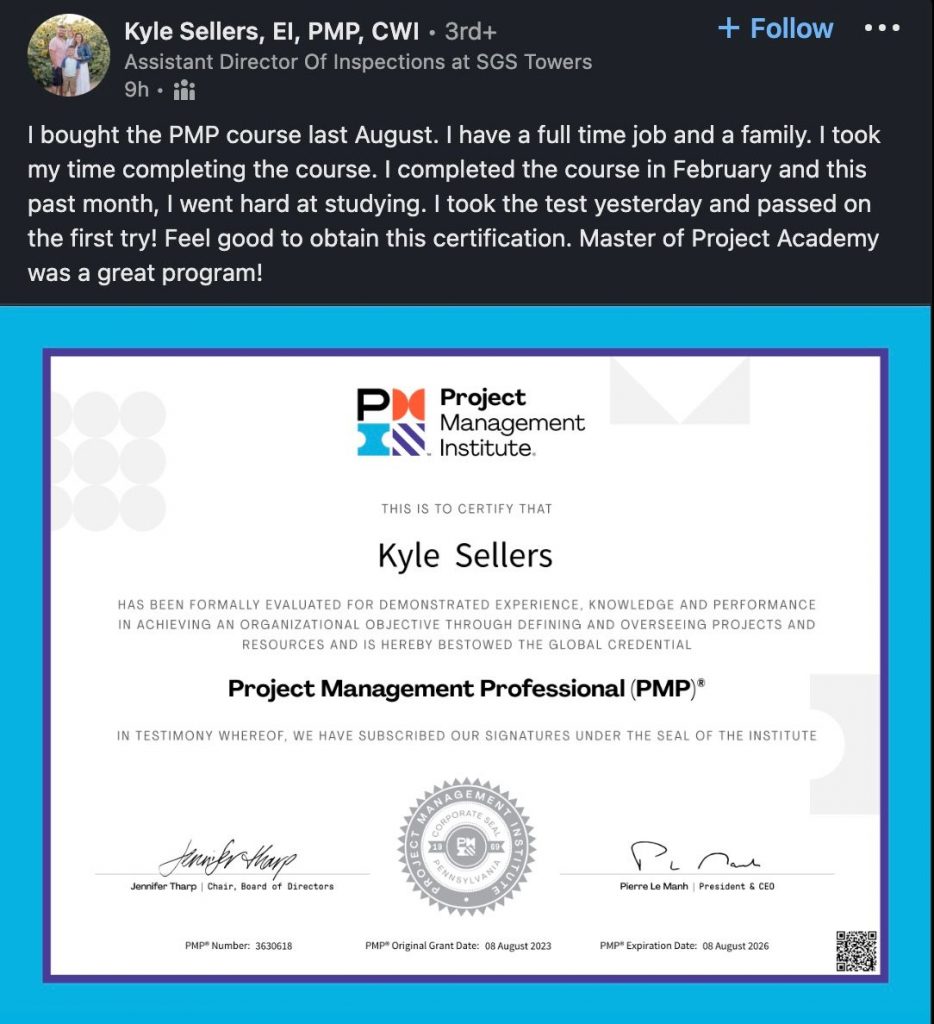
From Zero to PMP: Five Professionals Who Passed on Their First Attempt
This guide breaks down the exact practice strategy that has helped over 500,000 professionals across 180+ countries pass their project management certification exams — many on their first attempt, contributing to a 99.6% first-attempt pass rate. Whether you’re pursuing the PMP® (Project Management Professional) or CAPM® (Certified Associate in Project Management), you’ll learn why the right combination of practice exams, exam simulators, interactive case studies, math lectures, and flash cards is the difference between walking into Pearson VUE with confidence and walking in with hope.
Why Most PMP® and CAPM® Candidates Underestimate the Practice Phase
The PMP® exam is 180 questions in 230 minutes. The CAPM® exam is 150 questions in 180 minutes. Both are administered by the Project Management Institute (PMI®), and both have evolved significantly in recent years to emphasize situational judgment, agile and hybrid methodologies, and real-world decision-making over rote memorization.
Here’s what catches candidates off guard: knowing the PMBOK® Guide content is table stakes. PMI® designs questions that test how you apply that knowledge under time pressure, with ambiguous scenarios that mirror the messy reality of actual projects.
Consider a question that presents you with a project where the sponsor wants to cut scope, the team disagrees, and the timeline is non-negotiable. There’s no formula to plug in. There’s no knowledge area to recall. You need to have practiced enough scenario-based thinking that your instincts guide you to the best answer within 75 seconds.
That kind of readiness doesn’t come from reading. It comes from deliberate, realistic practice.
The Five Pillars of Exam-Ready Practice
After training over half a million project management professionals, one pattern is unmistakable: the candidates who pass on their first attempt almost always build their practice around five pillars — and they don’t skip any of them.
Pillar 1: Full-Length Practice Exams with Domain-Weighted Coverage
The foundation of any PMP® or CAPM® study plan is a library of full-length practice exams that mirror the real exam in format, difficulty, and domain distribution. Isolated quiz questions and chapter-end reviews simply don’t prepare you for the cognitive endurance required to maintain focus across 180 questions.
Master of Project Academy’s PMP® Exams, Math Lectures, & Flash Cards course includes 9 full-length PMP® practice exams, while the CAPM® Exams, Math Lectures, & Flash Cards course includes 7 full-length CAPM® practice exams. Each exam is built to replicate the domain weighting, question complexity, and time constraints you’ll face on test day.
Why 9 exams for PMP® and 7 for CAPM®? Because research on testing performance consistently shows that repeated exposure to varied question sets — not repeated review of the same questions — is what builds the pattern recognition needed for situational judgment questions. Each exam surfaces different scenarios, different stakeholder dynamics, and different project contexts, so you’re building breadth as well as depth.
Pillar 2: Timed Exam Simulators That Replicate Real Testing Conditions
There’s a meaningful difference between answering practice questions at your kitchen table with no time pressure and answering them under exam-like conditions. The stress of a ticking clock changes how your brain processes information, and candidates who haven’t practiced under time pressure often find themselves rushing through the final 30–40 questions.
This is why each practice exam in both the PMP® and CAPM® courses now includes its own individual exam simulator — a timed, domain-weighted simulation environment that replicates the pacing and interface of the actual certification exam.
But the real differentiator is the Mega Simulator.
The Mega Simulator combines the complete question banks from all practice exams — all 9 PMP® exams or all 7 CAPM® exams — into a single, comprehensive testing session. Think of it as the final dress rehearsal before opening night. If you can maintain focus, manage your time, and perform well across the Mega Simulator, the actual exam will feel like familiar territory.
Many candidates report that the Mega Simulator was the single most valuable preparation tool they used. The reason is straightforward: it eliminates the false confidence that comes from performing well on a single, shorter practice session and replaces it with evidence-based readiness.
6 Reasons 99.1% of Our Students Pass the PMP Exam on the First Attempt (and How You Can Too)
Pillar 3: Interactive Case Studies for Situational Judgment Mastery
PMI® has been steadily increasing the emphasis on situational judgment across both the PMP® and CAPM® exams. This trend accelerated with the PMP® exam content outline update and will continue with the upcoming July 2026 PMP® exam changes.
Situational judgment questions are inherently harder to prepare for because they don’t test whether you know the right process — they test whether you can choose the right action when multiple options seem reasonable. The difference between the best answer and the second-best answer often comes down to understanding stakeholder dynamics, organizational context, and the servant-leadership mindset that PMI® emphasizes.
Interactive case studies bridge this gap by placing you inside multi-layered project scenarios where you make decisions, see consequences, and develop the judgment instincts that exam questions are designed to test. Instead of reading about conflict resolution approaches, you’re navigating a disagreement between a product owner and a functional manager. Instead of memorizing the steps of integrated change control, you’re deciding whether to escalate a scope change that your sponsor hasn’t seen yet.
This kind of active practice is fundamentally different from passive review, and it directly maps to the way PMI® structures its most challenging questions.
Pillar 4: PMP® and CAPM® Math Lectures for Formula-Based Confidence
Every PMP® and CAPM® candidate eventually encounters formula-based questions — Earned Value Management (EVM), critical path calculations, PERT estimates, schedule and cost variance, and more. For many professionals, especially those who haven’t worked with these formulas recently, math questions are the most anxiety-inducing portion of the exam.
The math lectures included in both the PMP® practice exam course and the CAPM® practice exam course break down every formula you’re likely to encounter into clear, step-by-step explanations. Rather than memorizing formulas in isolation, you learn when to apply each formula, how to extract the right data from question stems, and why certain formulas are structurally related to each other.
Understanding that CPI = EV/AC and SPI = EV/PV share the same structure — with Earned Value always in the numerator — is far more durable than flash-memorizing two separate equations. The math lectures teach you to see these relationships, so that even under exam pressure, you can reconstruct any formula you temporarily forget.
Master of Project Academy vs. Udemy: A Real Comparison Beyond Price Tags
Pillar 5: Digital Flash Cards for Continuous Reinforcement
The science of spaced repetition has been well-established for decades: reviewing information at increasing intervals dramatically improves long-term retention compared to massed practice (cramming). Digital flash cards are the most practical way to implement spaced repetition into a busy professional’s study schedule.
The flash cards included in both courses cover key concepts, definitions, formulas, process groups, knowledge areas, agile terminology, and the critical distinctions that PMI® loves to test (such as the difference between validate scope and control scope, or between quality assurance and quality control).
Because they’re digital, you can review them during your commute, on a lunch break, or in the 15 minutes before a meeting. This kind of micro-learning compounds over weeks, ensuring that critical concepts stay top of mind when exam day arrives.
Building Your Study Plan: How to Use These Tools Together
Having access to practice exams, simulators, case studies, math lectures, and flash cards is only valuable if you use them strategically. Here’s the approach that high-performing candidates consistently follow.
Weeks 1–2: Foundation and Diagnostic Assessment. Start with one full-length practice exam to establish your baseline score. Don’t worry about the result — this exam is diagnostic. Review every question you got wrong, and use the flash cards daily to begin building retention around the concepts you missed. Begin the math lectures in parallel.
Weeks 3–5: Targeted Practice and Concept Building. Work through 2–3 more practice exams, using the individual exam simulators to practice under timed conditions. After each exam, identify your weakest domains and use the interactive case studies to deepen your understanding of those areas. Continue daily flash card review.
Weeks 6–7: Intensification. Complete the remaining practice exams. Your scores should be trending upward. Focus your case study practice on the specific scenario types that still challenge you — whether that’s agile ceremonies, stakeholder engagement, or procurement decisions.
Week 8: Final Readiness. Take the Mega Simulator under full exam conditions — find a quiet room, set the timer, and complete it in one sitting. If you score 65% or higher, you can confidently book your PMP® or CAPM® exam. If you’re below 65%, spend an additional week reviewing your weakest areas, then retake the Mega Simulator.
This 65% benchmark isn’t arbitrary. Based on data from hundreds of thousands of Master of Project Academy students, candidates who consistently score above 65% on these practice exams have an extremely high probability of passing the real certification exam.
What Makes These Practice Exams Different from Free Online Questions
The internet is full of free PMP® and CAPM® practice questions. Some of them are decent. Many of them are outdated, poorly written, or based on the pre-2021 exam format. Here’s what distinguishes professional-grade practice exams from free alternatives.
Current exam alignment. PMI® updates its exam content outlines periodically, and every question must align with the current blueprint. Master of Project Academy’s exams are continuously updated to reflect the latest PMI® exam specifications — including the predictive, agile, and hybrid balance that defines the current PMP® exam.
Question quality and ambiguity calibration. The real PMP® exam is known for questions where two answers seem correct. Poorly designed practice questions either make the right answer too obvious (which builds false confidence) or make all answers equally confusing (which builds frustration, not skill). Well-designed practice questions mirror the specific kind of ambiguity you’ll encounter, so you learn to distinguish between “good” answers and “best” answers.
Comprehensive explanations. Every question includes a detailed rationale for both the correct answer and why the distractors are incorrect. This is where real learning happens — not in getting the question right, but in understanding whyeach option is or isn’t the best choice.
Domain-weighted distribution. The PMP® exam follows a specific domain distribution (People, Process, Business Environment), and your practice exams should mirror this. Generic question banks that don’t weight by domain can leave you over-prepared in one area and dangerously under-prepared in another.
Why Project Management Specialists Beat General Learning Platforms Every Time?
The July 2026 PMP® Exam Changes: Why Preparing Now Gives You an Advantage
PMI® has announced updates to the PMP® exam taking effect in July 2026. While the core competency domains remain consistent, content emphasis and question formats are evolving. Candidates who begin their practice now — before the transition — have a strategic advantage.
If you’re planning to sit for the PMP® exam before July 2026, building your readiness with the current exam format means you’re studying the right material with no ambiguity about what’s tested. If you’re planning to sit after the transition, establishing a strong foundation now means you’ll only need to adjust for the incremental changes rather than starting from scratch.
Either way, the practice methodology — full-length exams, timed simulations, case study immersion, math mastery, and flash card reinforcement — remains the highest-confidence path to first-attempt success.
🚀 The Clock is Ticking: Why You Must Earn Your PMP Before the Major 2026 Exam Update
Frequently Asked Questions
How many practice exams should I complete before booking my PMP® exam?
Complete all 9 PMP® practice exams and take the Mega Simulator at least once. The goal isn’t to rush through exams — it’s to use each one as a learning opportunity. Review every incorrect answer thoroughly before moving to the next exam. When you’re consistently scoring above 65%, you’re ready.
How many practice exams should I complete before booking my CAPM® exam?
Work through all 7 CAPM® practice exams, use the individual simulators for timed practice, and complete the Mega Simulator as your final readiness check. The 65% benchmark applies here as well — if you’re hitting that threshold consistently, your certification exam is within reach.
What’s the difference between a practice exam and an exam simulator?
A practice exam is a set of questions you can work through at your own pace, reviewing answers as you go or at the end. An exam simulator adds the time pressure, question sequencing, and interface experience of the real certification exam. Both are important — practice exams for learning, simulators for readiness conditioning.
How do interactive case studies help with PMP® and CAPM® preparation?
PMI® increasingly tests situational judgment — your ability to choose the best course of action in complex project scenarios. Interactive case studies immerse you in multi-step project situations where you make decisions and see outcomes, training the exact cognitive skill that these questions assess.
The Science of Learning: How Gamification Transforms PMP Exam Preparation
I’m weak in math — should I start with math lectures or practice exams?
Start both simultaneously. Take your first practice exam to identify which math concepts appear and where your gaps are, then use the math lectures to fill those specific gaps. This targeted approach is more efficient than working through all the math content before touching a practice exam.
Can I use the flash cards as my primary study method?
Flash cards are a reinforcement tool, not a primary learning method. They’re most effective when used alongside practice exams, simulators, and case studies to keep critical concepts fresh between deeper study sessions. Think of them as the connective tissue that binds your preparation together.
How long does it take to prepare for the PMP® exam using this approach?
Most professionals following the 8-week study plan outlined above, dedicating 10–15 hours per week, find themselves exam-ready by the end of that period. However, your timeline depends on your existing project management experience and familiarity with PMI® methodology. Candidates with extensive real-world experience often move faster.
How long does it take to prepare for the CAPM® exam?
The CAPM® exam is designed for professionals earlier in their project management careers, so the content scope is somewhat narrower than the PMP®. Most candidates need 4–6 weeks of focused preparation, though this varies based on your background.
Are these practice exams updated for the current PMP® and CAPM® exam formats?
Yes. All practice exams, simulators, case studies, and flash cards are aligned with the current PMI® exam content outlines. Master of Project Academy continuously updates its materials when PMI® releases exam specification changes.
What’s the Mega Simulator and when should I use it?
The Mega Simulator combines all practice exam questions into one comprehensive testing session — pulling from all 9 PMP® exams or all 7 CAPM® exams. Use it as your final readiness assessment, ideally in the last week before your scheduled exam date. It’s designed to be taken in one sitting under full exam conditions.
Your Next Step
If you’re serious about earning your PMP® or CAPM® certification, the question isn’t whether you need realistic practice — it’s whether the practice tools you’re using are rigorous enough to match the real exam.
Master of Project Academy’s practice suite gives you everything in one place: full-length practice exams, individual exam simulators, the Mega Simulator, interactive case studies, math lectures, and digital flash cards — backed by a 99.6% first-attempt pass rate and the trust of over 500,000 professionals worldwide.
→ Start your PMP® exam preparation today
→ Start your CAPM® exam preparation today
Score 65%+ on these practice exams, and you can book your certification exam with confidence.
PMP®, CAPM®, PMBOK®, and PMI® are registered marks of the Project Management Institute, Inc.